Is Photography on the Rise Globally?
More dedicated cameras are being shipped, younger collectors are engaging with photography and more photographic works are changing hands. The wider picture, however, is more nuanced than a simple market boom.
The short answer is yes, although photography is rising in several different ways. More people are using dedicated cameras, more photographic lots are selling at auction and younger collectors are showing strong interest in the medium. Prices, however, are not rising at the same rate across the market.
To understand what is happening, it helps to separate participation from price. Photography can grow through the number of people making it, the audiences visiting exhibitions, the collectors entering the field and the institutions preserving it. Those forms of growth do not always produce an immediate increase in auction turnover.
Dedicated cameras are growing again
For several years, the rise of the smartphone created the impression that the dedicated camera was disappearing. Recent shipment figures tell a different story. According to the Camera & Imaging Products Association, worldwide digital camera shipments reached 9,438,876 units in 2025, an increase of 11.2% from 2024.
Built-in lens cameras recorded the strongest growth, rising 29.6% to more than 2.4 million units. Mirrorless camera shipments rose 12.5% to more than 6.3 million units. Growth was recorded across China, Europe, the Americas, much of Asia and other regions.
These figures remain below the peak years of the compact digital camera. They still show renewed demand for dedicated tools that offer greater control, specific image qualities and a more deliberate photographic process.
Younger collectors are engaging with photography
The collecting picture is also encouraging. The Art Basel and UBS Survey of Global Collecting 2025 examined 3,100 high-net-worth collectors across ten markets. It found that photography received a higher share of fine art spending year on year and that millennials were the most active collectors of prints, photography and works on paper.
Among collectors planning future purchases, 23% hoped to buy photography. Women in the survey devoted a higher share of their spending to photography than men. These findings do not describe every buyer or every region, but they do show that photography has a meaningful place in the habits of younger and increasingly diverse collectors.
Editioned prints provide different entry points, allowing new collectors to begin at a level that may be more approachable than many unique works. Our guide to buying your first print explains what to look for when starting.
The auction market tells a more complicated story
Auction data is where the answer becomes more measured. A 2025 analysis by Artnet News and Morgan Stanley compared photography auction results from 2005 to 2024. The number of photographic lots sold increased from 7,055 to 15,366, meaning that the volume of works sold more than doubled.
Total sales value moved from $113.4 million in 2005 to $116.9 million in 2024, an increase of only 3% before inflation. The average price fell from $16,068 to $7,608. Adjusted for inflation, the market’s total value declined over the period.
This creates a two-part picture. More photographs are entering the market and finding buyers, which suggests wider participation. At the same time, greater supply and softer average prices mean that photography has not experienced a consistent high-value boom. Growth is happening through volume and access faster than through price.
Institutions are treating photography as active cultural material
The institutional picture is especially visible in 2026. MoMA’s Ideas of Africa: Portraiture and Political Imagination examined how photographic portraits helped shape Pan-African solidarity. At the Morgan Library & Museum, Hujar:Contact presents more than 110 contact sheets alongside 20 enlargements, placing the photographer’s selection process at the centre of the exhibition.
The National Portrait Gallery’s July 2026 acquisition of Harley Weir’s 2024 portrait of Charli XCX provides another useful signal. A recent editorial portrait can quickly enter a national collection as a record of contemporary culture. Meanwhile, the 2026 Rencontres d’Arles continues to bring historical work, contemporary practice, archives and photobooks into one international programme.
These examples do not prove that every part of the sales market is expanding. They show that photography is increasingly being used to examine history, identity, authorship and the process of making images. They also confirm the importance of archives as active cultural material rather than passive storage.
Photography fits the way people discover art today
The wider art market is already moving across these channels. In the Art Basel and UBS survey, 58% of high-net-worth collectors made purchases linked to art fairs, up from 39% in 2023. Instagram purchases were reported by 51%, up from 43%. These figures cover art broadly, but photography is especially well placed within a market that connects online discovery with physical viewing.
Photobooks add another route. A book can introduce a complete series and establish context before someone considers a print. For many people, a book is the first serious photographic object they own.
Image abundance is making authorship more important
We encounter an extraordinary volume of images every day. Artificial intelligence has made polished image generation fast and widely available, placing greater attention on authorship, intention, process and evidence.
For a human-made photograph, the questions become increasingly important. Who made it? When and where was the image taken? What relationship did the photographer have with the subject? Does a negative, contact sheet or working print survive? Who produced the final print and when? Is its provenance clear?
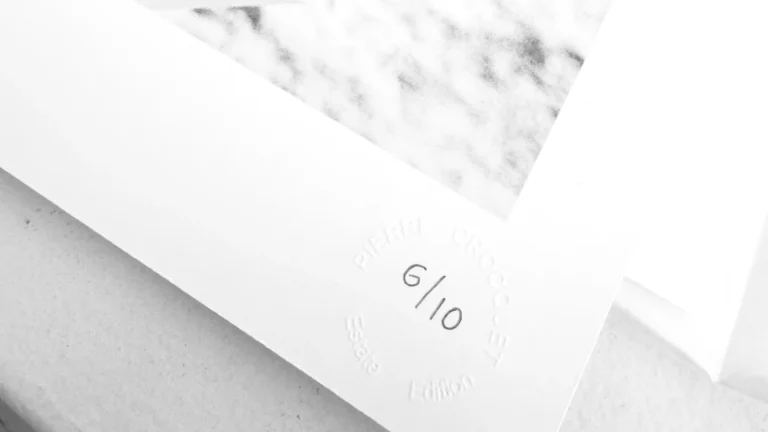
A photograph with a traceable history carries information that extends beyond its visible surface. The negative, print process, image date, print date, signature, edition and archive all help explain what the object is. As generated images become easier to produce, this material and documentary record may become even more significant.
What does this mean for South African photography?
Growing global interest creates an opening for South African photography. The country has deep histories across documentary work, portraiture, journalism, fashion, landscape, city life and contemporary practice. Many important bodies of work remain unfamiliar internationally.
Reaching those audiences requires careful preservation, accurate cataloguing, research, digitisation, publishing and sustained presentation. A photograph needs context and reliable information if it is to travel responsibly between an archive, exhibition, publication and collection.
This is central to the work of Gallery F and PAPA-SA. We connect the finished print to the archive, the photographer, the city, the process and the historical moment behind it. By preserving archives and making photographs available for research, exhibitions and collecting, we help South African work enter a wider conversation while retaining the histories attached to it.
So, is photography on the rise?
Yes, if we measure the rise through participation, camera demand, public interest, collector engagement and the number of photographs being sold. The evidence is less convincing if we define growth only as rising auction prices.
Photography is becoming a wider field with more routes into it. People can begin with a photobook, visit a gallery, follow an archive, buy an editioned print or build a collection gradually. That breadth may be the medium’s strongest form of growth.
For collectors, this is a useful moment to look carefully. Strong photography is supported by authorship, context, print quality, condition, provenance and the lasting importance of the image. Those fundamentals matter more than any short-term claim that a market is rising.
Sources and further reading
Market and participation figures in this article were checked against the CIPA 2026 shipment outlook, the Art Basel and UBS Survey of Global Collecting 2025 and the Artnet News and Morgan Stanley photography auction analysis. Current institutional examples are linked directly to MoMA, the Morgan Library & Museum, Rencontres d’Arles and the report on the National Portrait Gallery acquisition above.
Photography is rising through participation, access and cultural importance. Its prices tell a slower and more uneven story.
Continue Exploring
Discover South African photography
Gallery F presents archival and contemporary photography from South Africa. Visit us in Cape Town to spend time with the prints, browse available works online or read our collecting guide for a clear introduction to editions, processes and what to look for.
More Stories