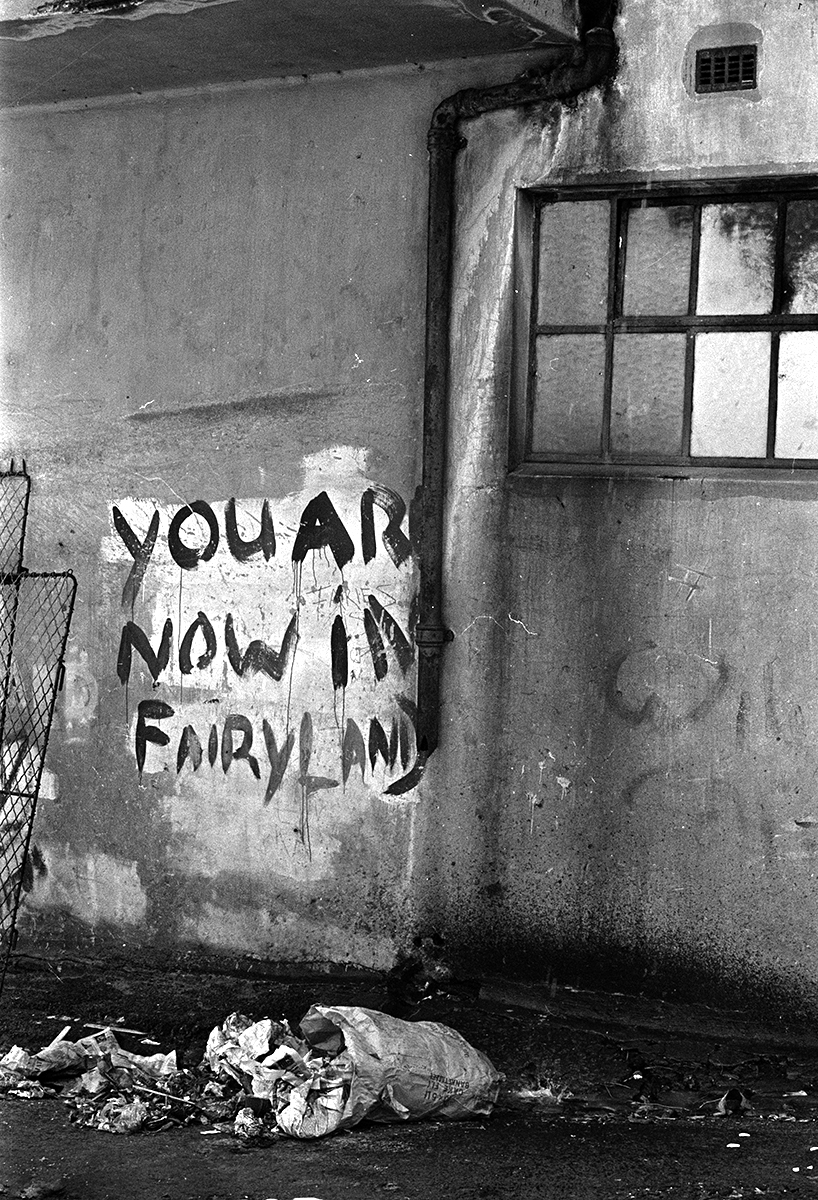
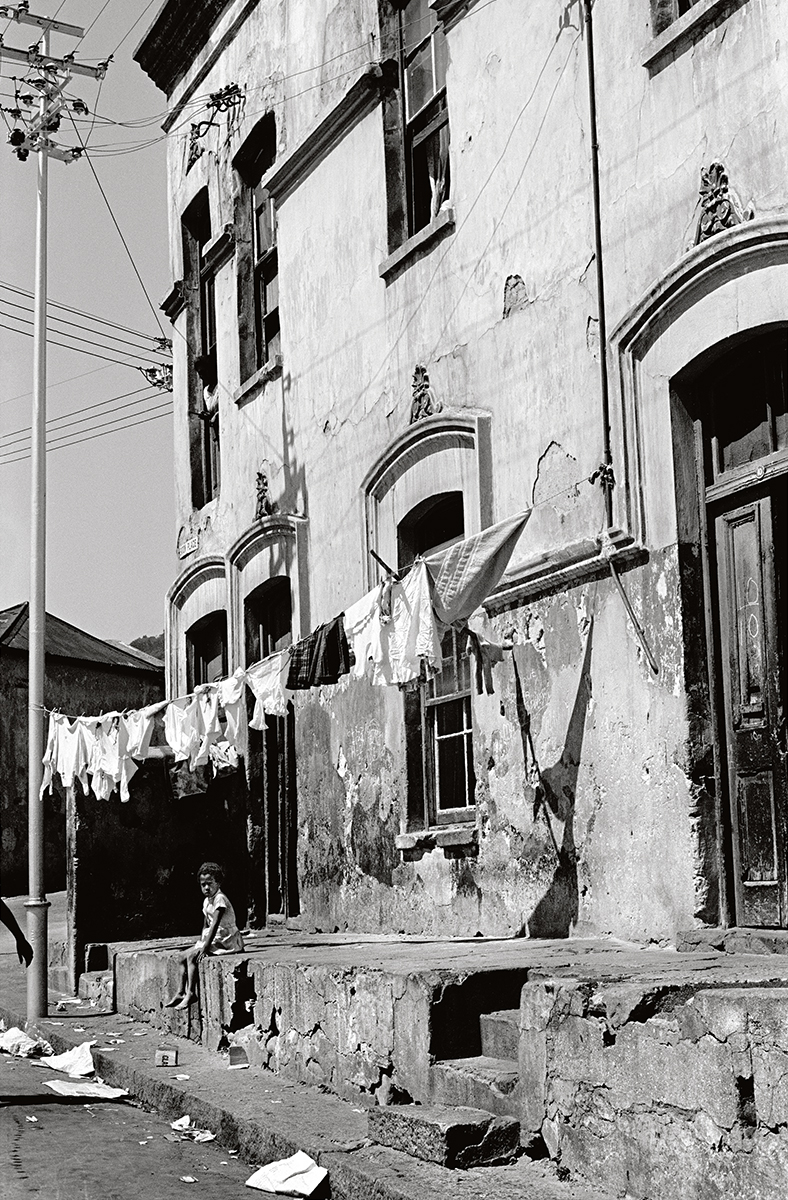
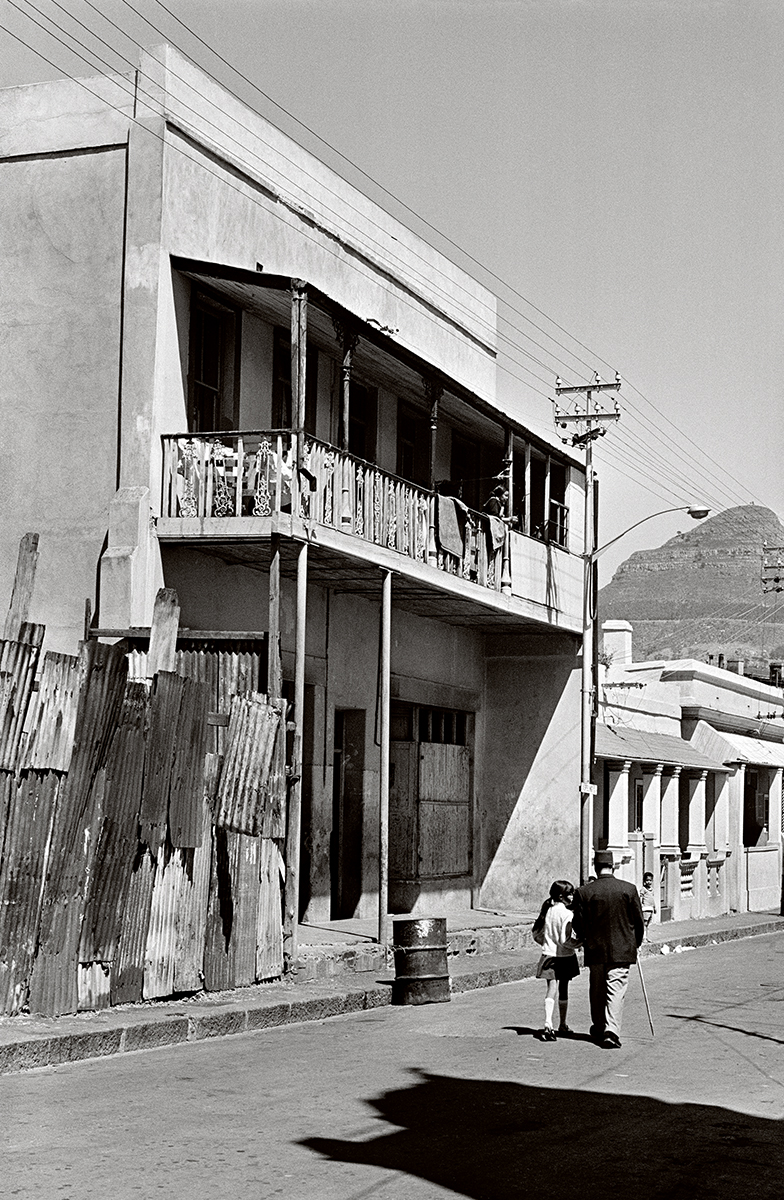
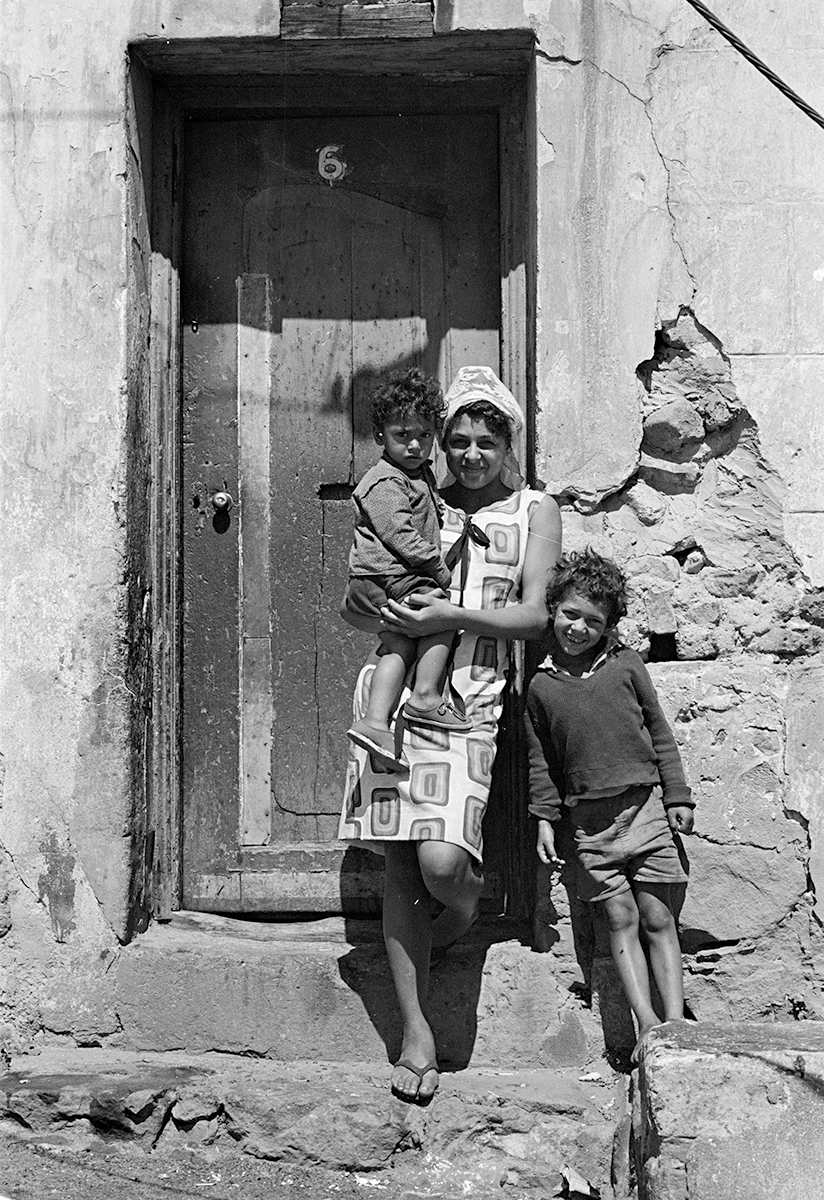
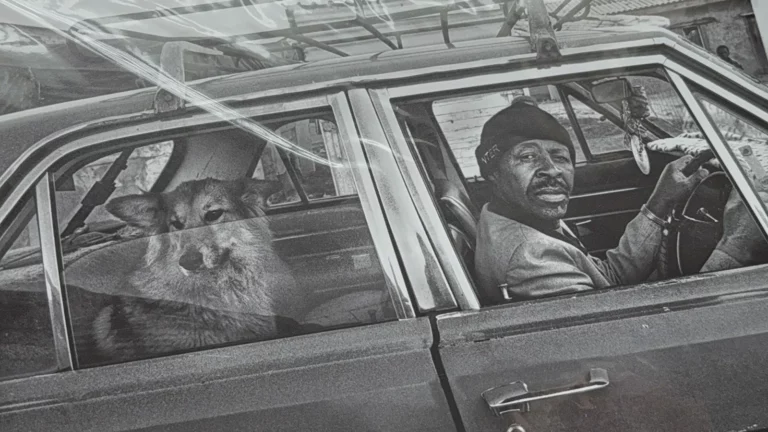
David Levin’s photographs of District Six hold both documentary and historical weight, recording everyday street life in one of Cape Town’s most culturally layered neighbourhoods before its destruction under apartheid-era forced removals.
Made during the 1960s, these photographs reflect Levin’s close observation of people, architecture and the rhythms of ordinary life. Rather than seeking spectacle, the work remains grounded in presence, gesture and the structure of the street itself.
Working in black and white and using available light, Levin photographed moments of interaction, pause and movement. The resulting images now stand not only as photographic works, but also as records of a social world that was later violently altered.
Photographing a Changing Cape Town
District Six and the surrounding areas were central to the visual and social life of Cape Town. Levin’s images preserve a sense of place shaped by community life, dense urban texture and daily routines, offering a view of the city before permanent upheaval reshaped it.
These photographs now speak both as images and as records of a neighbourhood that no longer exists in the same form.
Street Life and Social History
Levin’s work carries a sense of familiarity with the places he photographed. Growing up in Cape Town and later returning to photograph areas close to his own experience, he approached the street with attentiveness rather than distance.
Today, these images hold lasting importance within the history of South African photography. They offer insight into lived experience, urban memory and the visual history of Cape Town through the perspective of a photographer working with clarity and restraint.