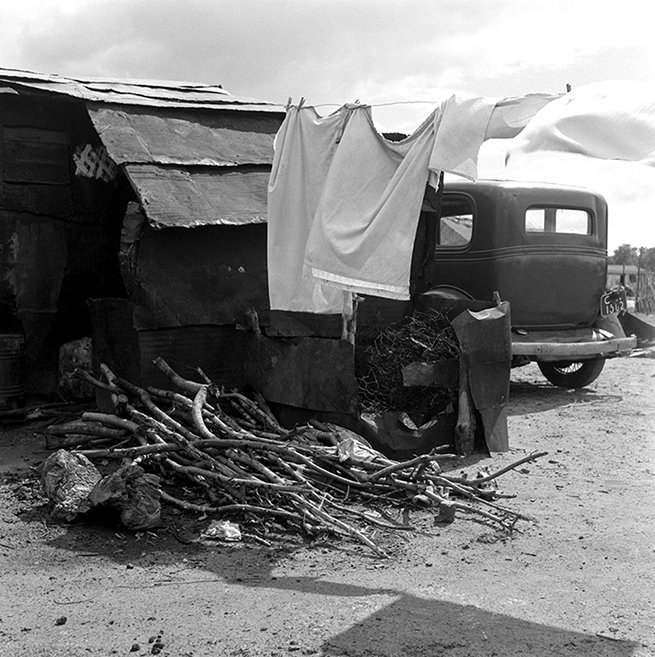
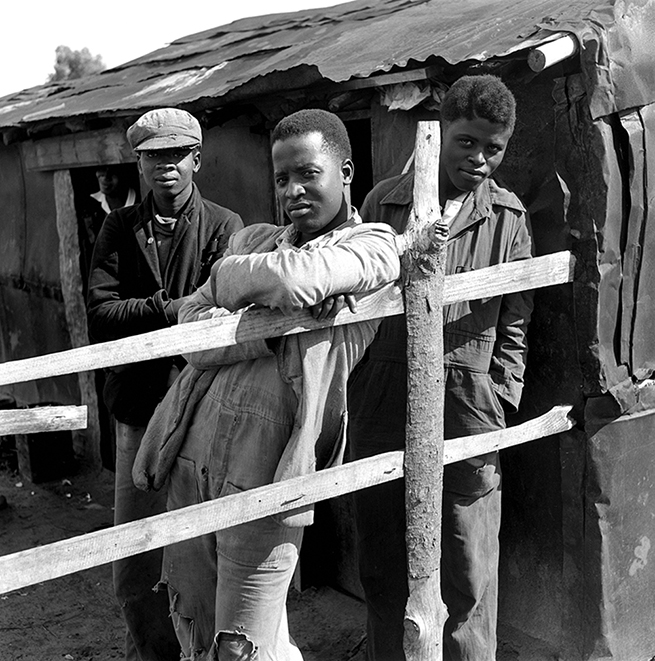
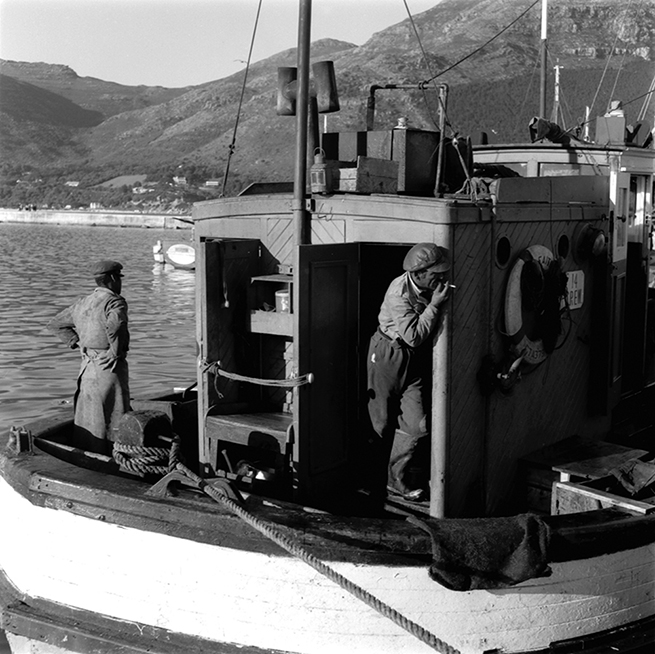
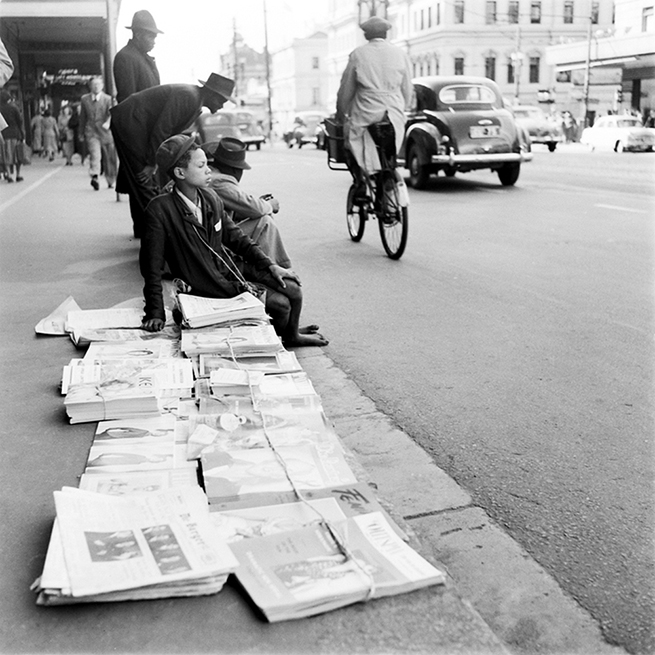
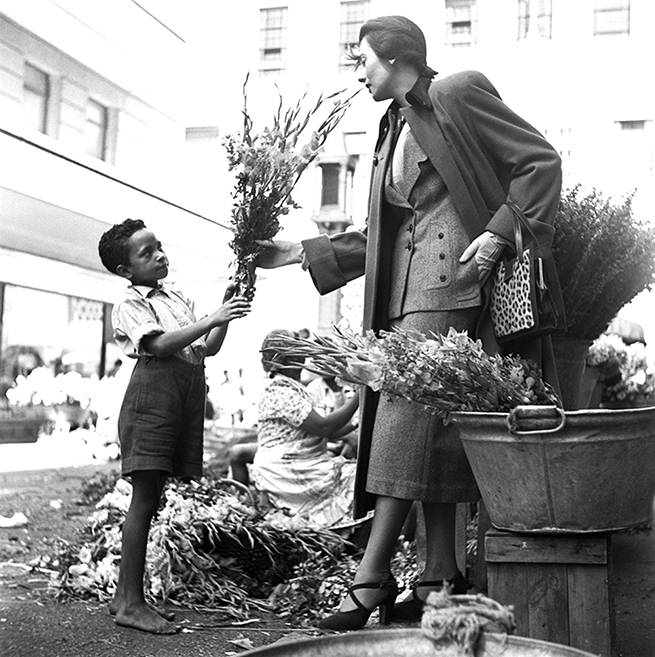
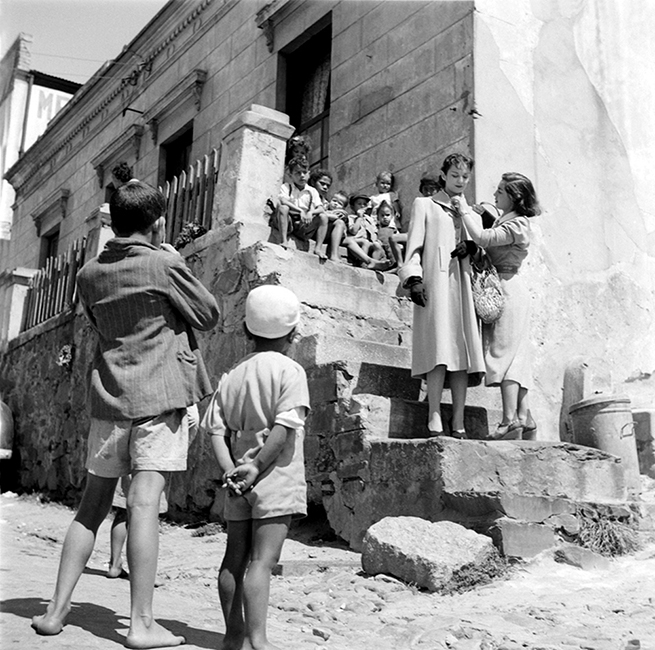
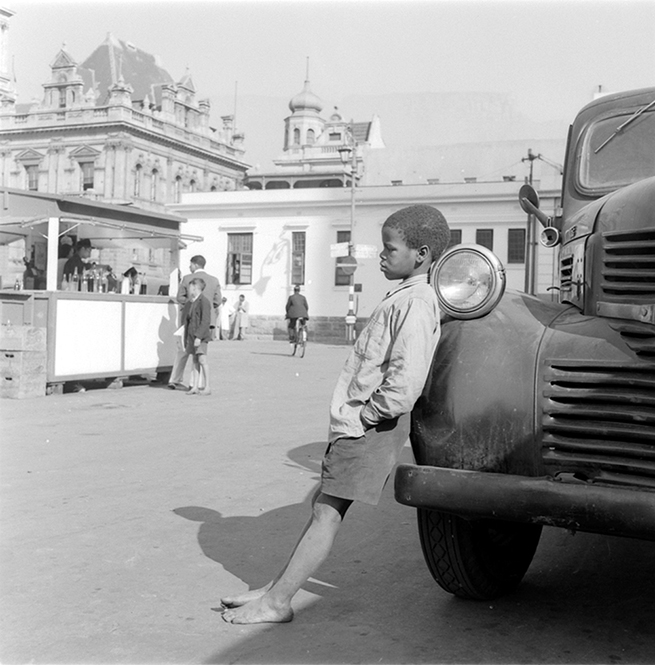
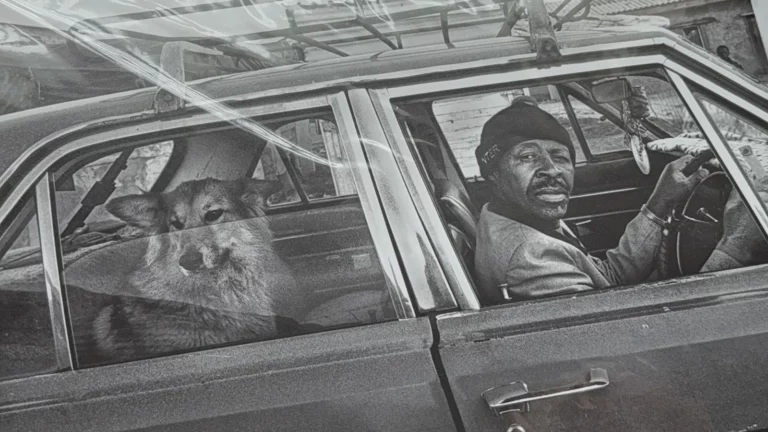
Rather than isolating dramatic events, these photographs stay close to the ordinary theatre of the street. Architecture, pavements, shadows, signage and figures in motion all become part of a visual language that reveals how the city was inhabited. Odes worked with patience and clarity, allowing seemingly modest moments to accumulate into a broader social portrait.
Seen together, the photographs carry both documentary and formal strength. They register the textures of Cape Town at a particular historical moment while also attending to structure, rhythm and composition. The result is a body of work that feels historically grounded and visually precise.
Street Observation and Urban Rhythm
Odes’ photographs often balance human presence against the geometry of the city. Streets become places of transition and encounter. Individuals pass through the frame, pause at corners or gather in public space, while surrounding architecture quietly anchors the image. This sense of relation between figure and setting is central to the series.
The photographs also speak to the value of visual observation within South African photographic history. They preserve not only appearances but patterns of behaviour, social proximity and the physical character of a changing city. In that sense, they remain significant both as artworks and as records.
These photographs show everyday life in Cape Town as it unfolded in the streets. Small moments of movement, pause and interaction become part of a wider picture of the city during the 1950s and early 1960s.
Historical Importance
Today, the series offers viewers access to a Cape Town that has partly disappeared and partly transformed beyond recognition. Buildings, street life and modes of dress place the images within their time, yet the photographs remain immediate because of their sensitivity to human presence. They remind us that urban history is often carried in fleeting interactions and overlooked details.
Within the wider context of Gallery F, this body of work contributes to the ongoing preservation and presentation of South African photography. It deepens an understanding of the city while also foregrounding Ginger Odes as a photographer whose archive deserves close attention.