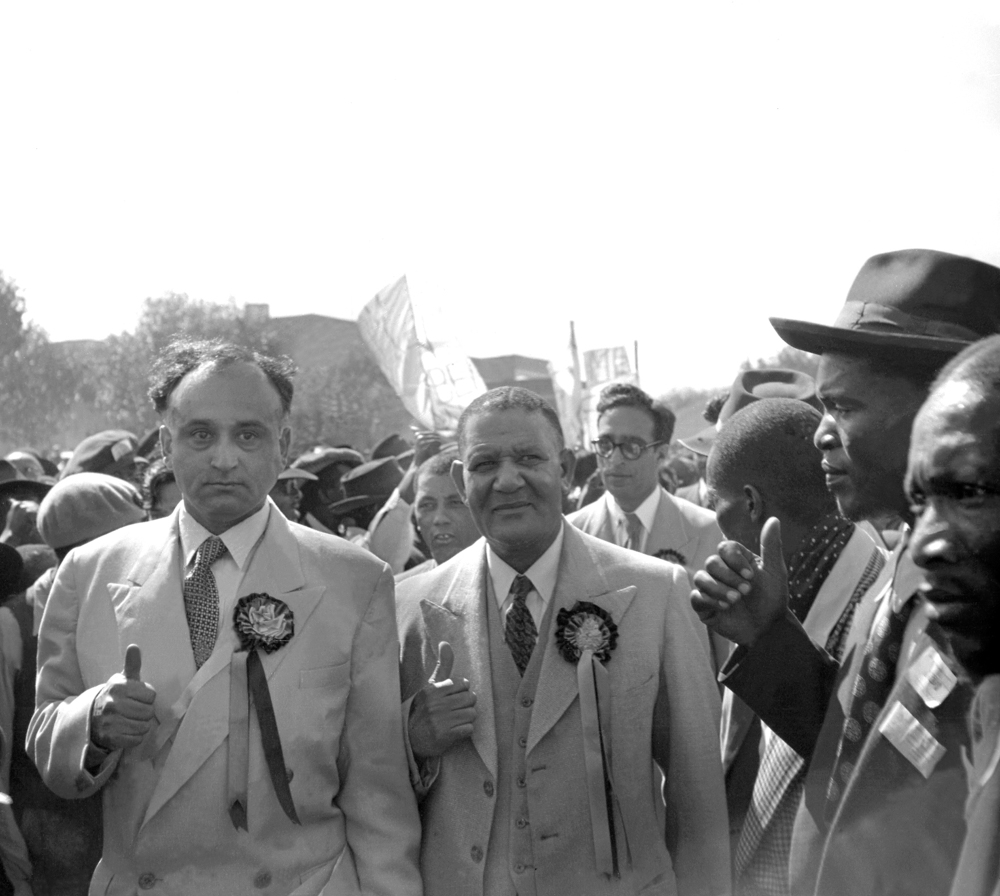
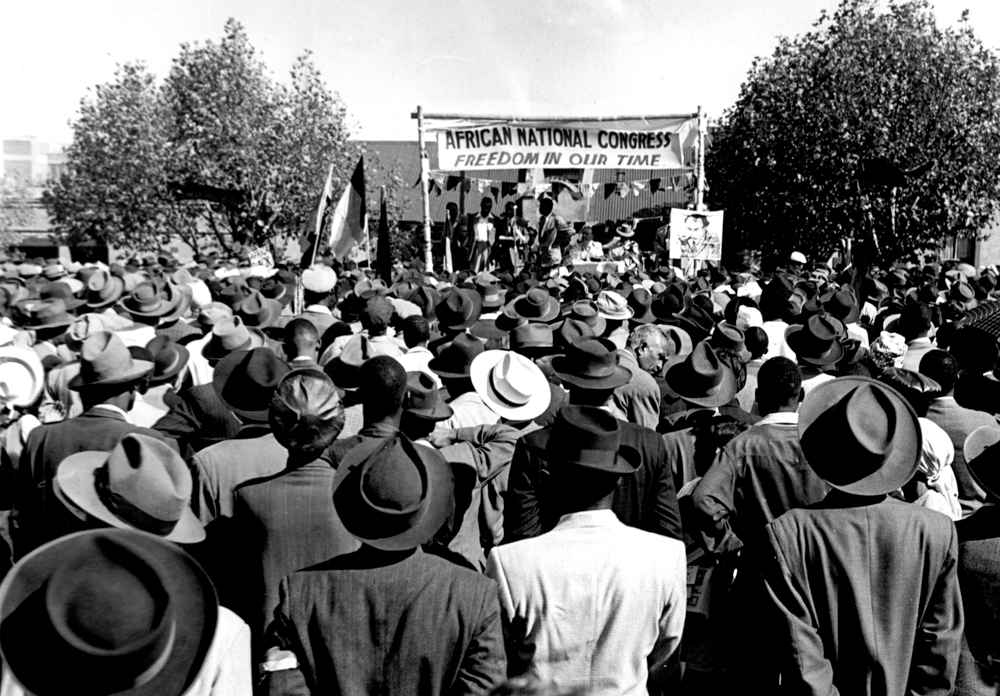
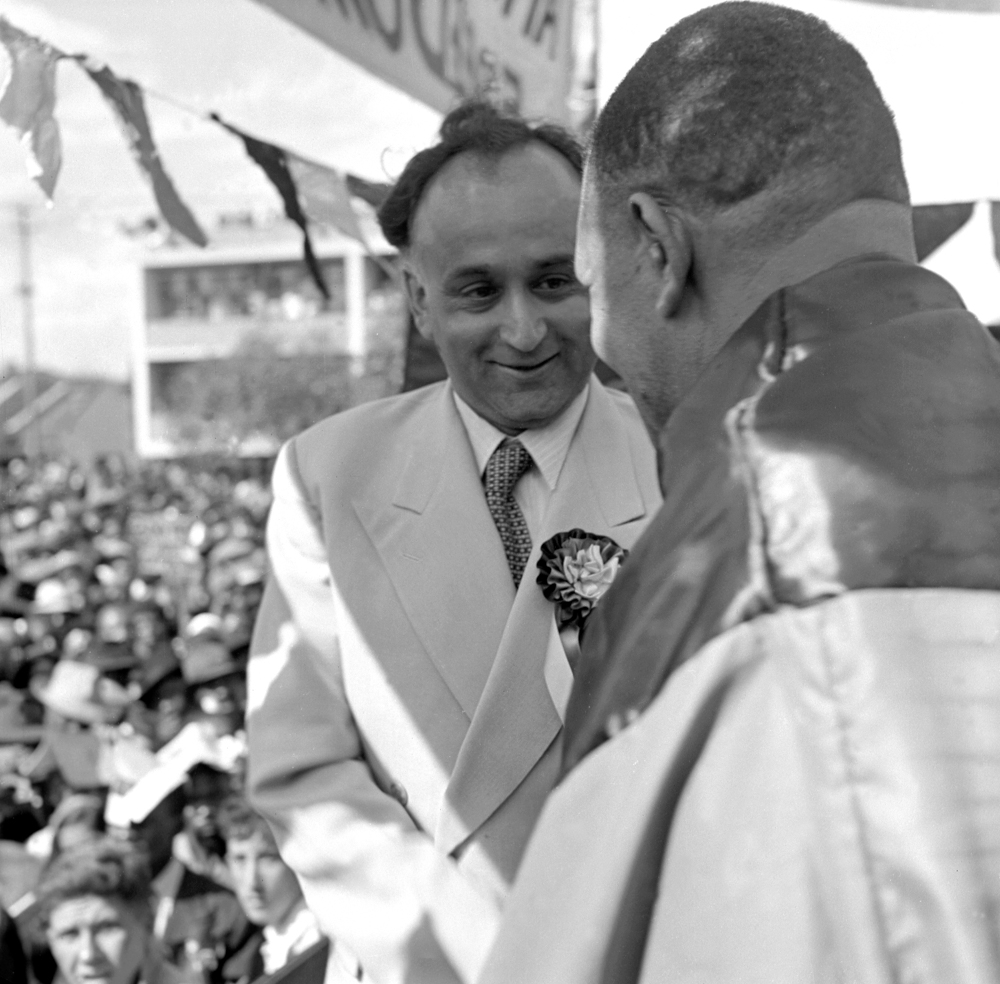
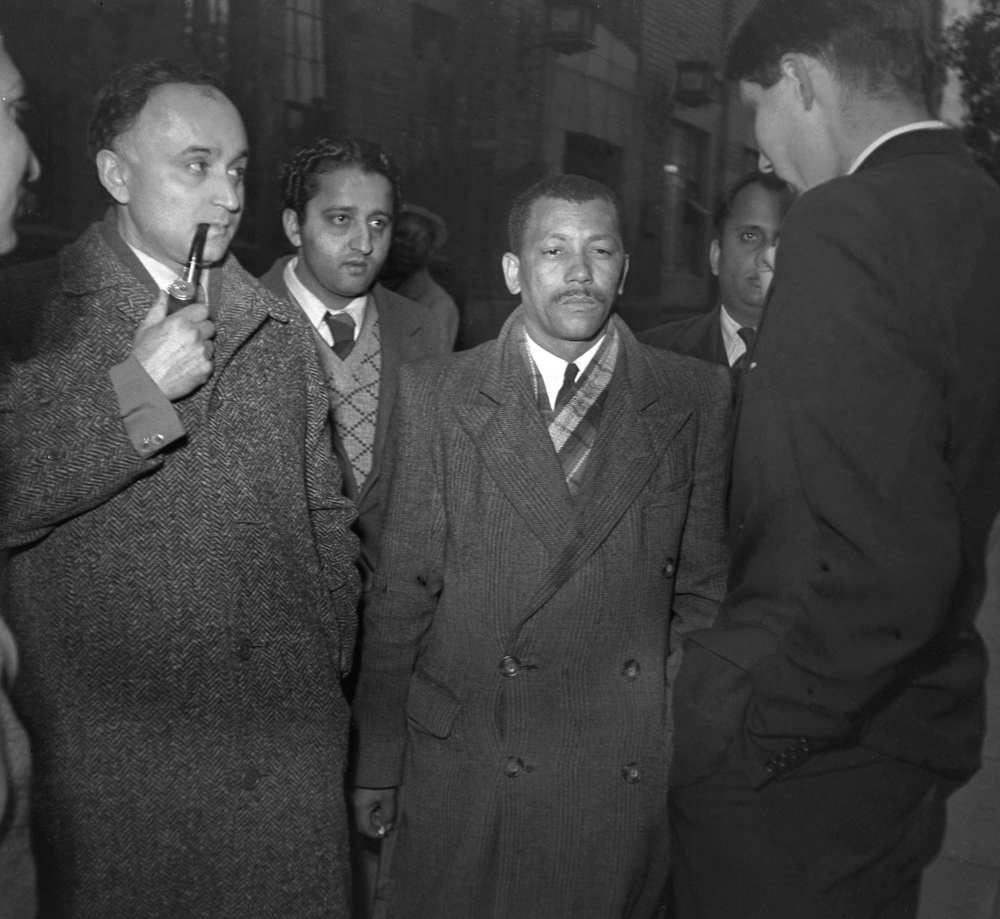
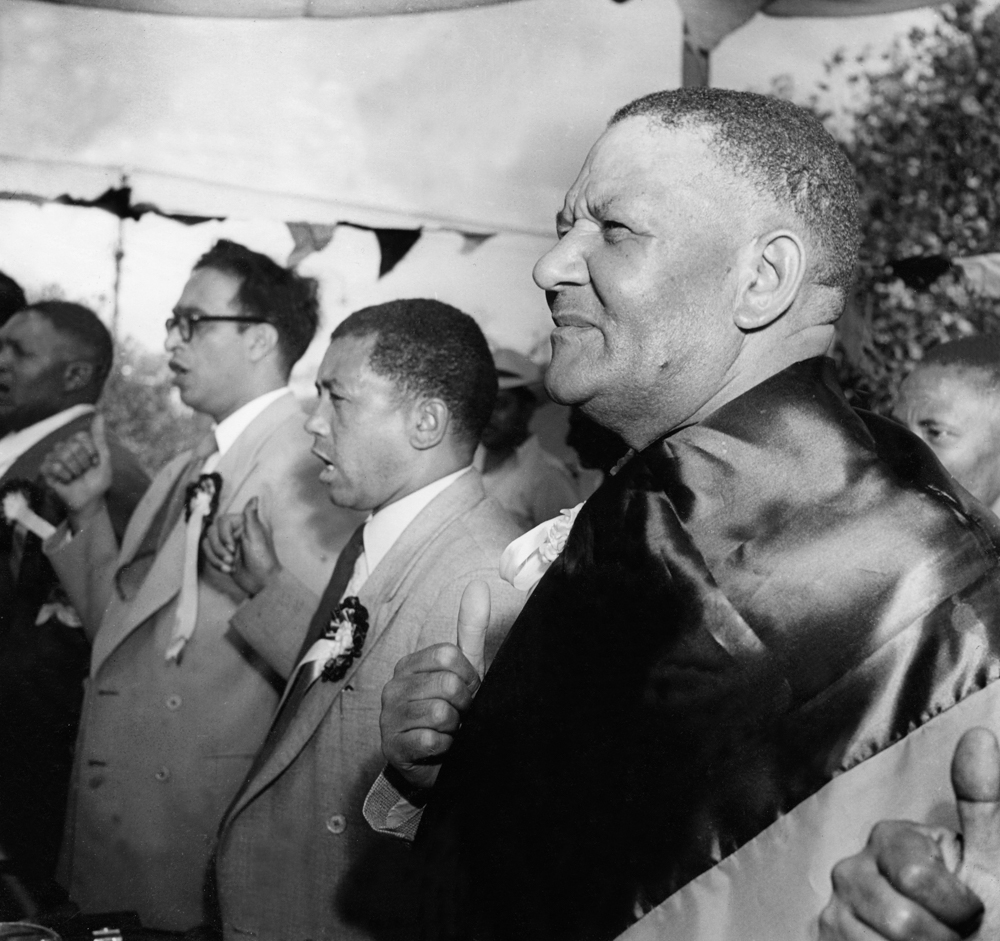
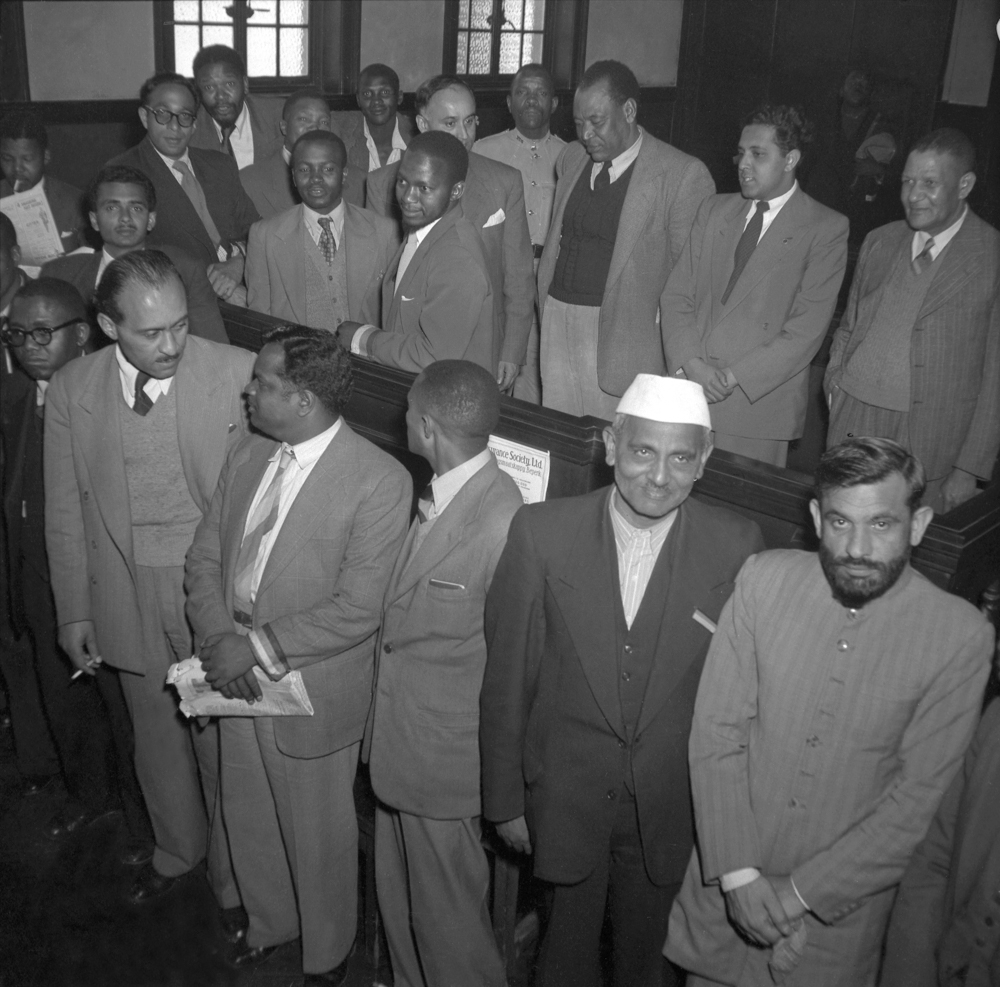
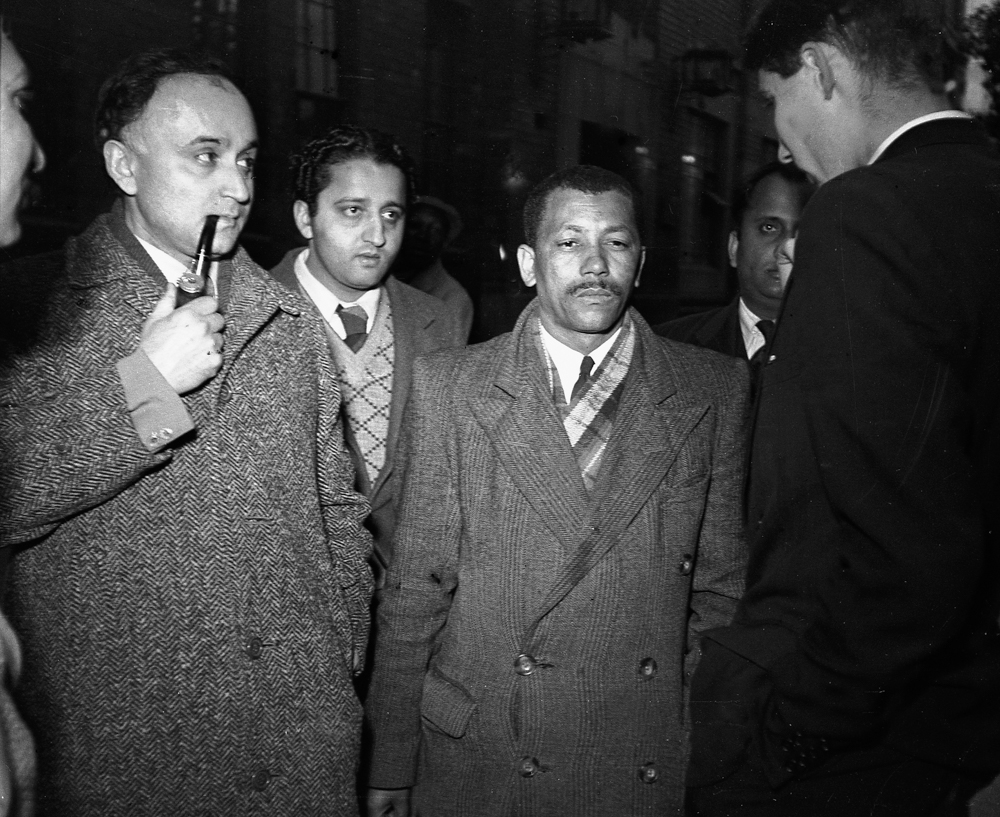
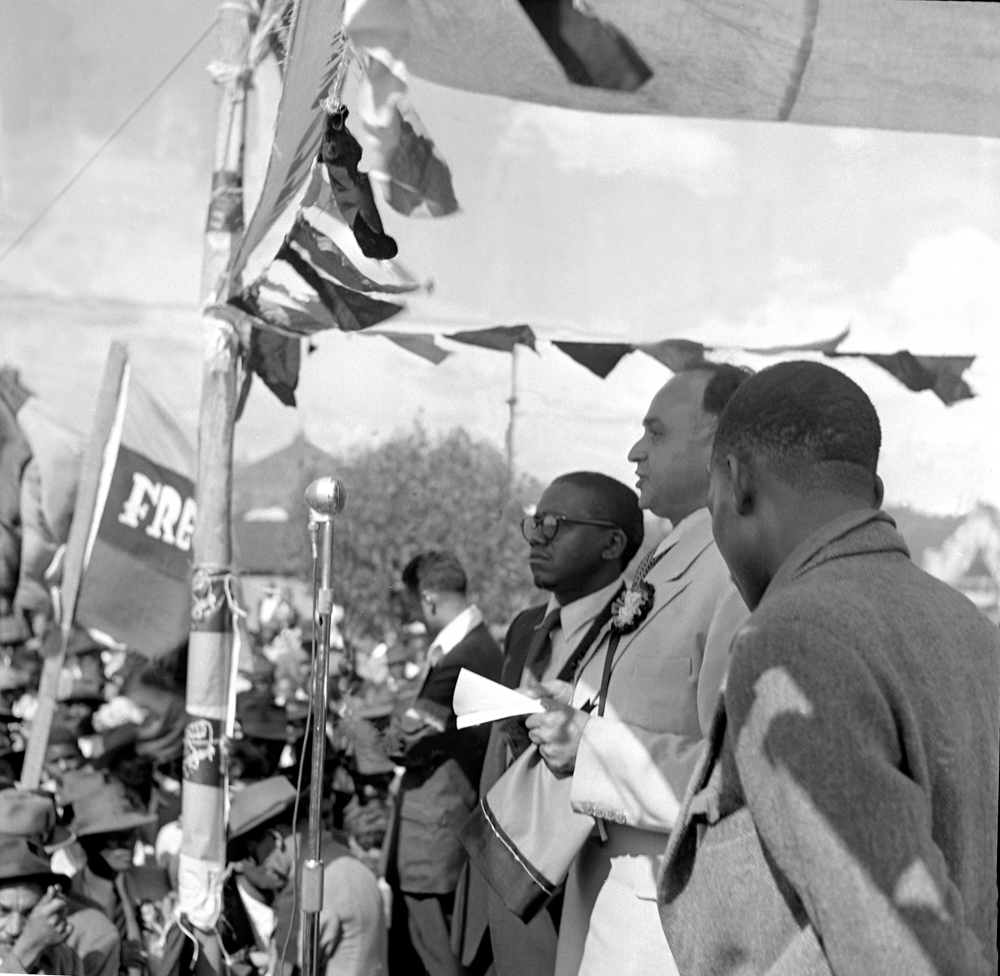
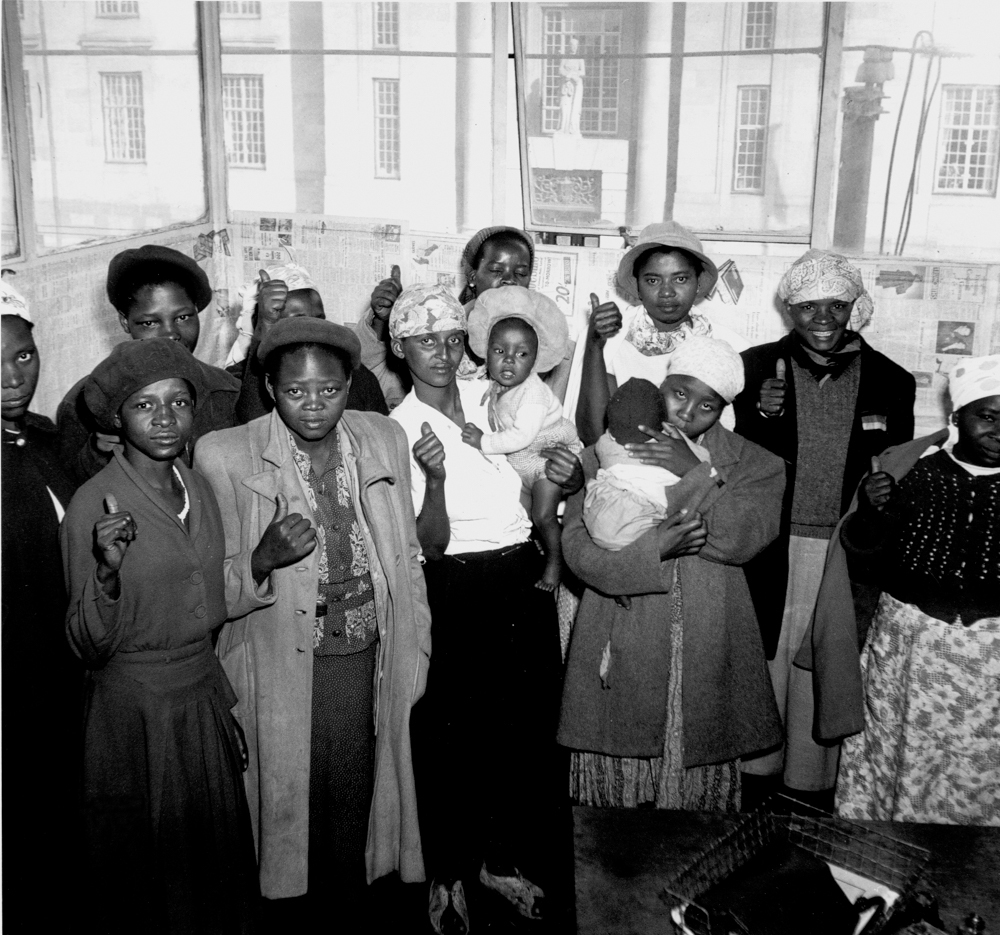
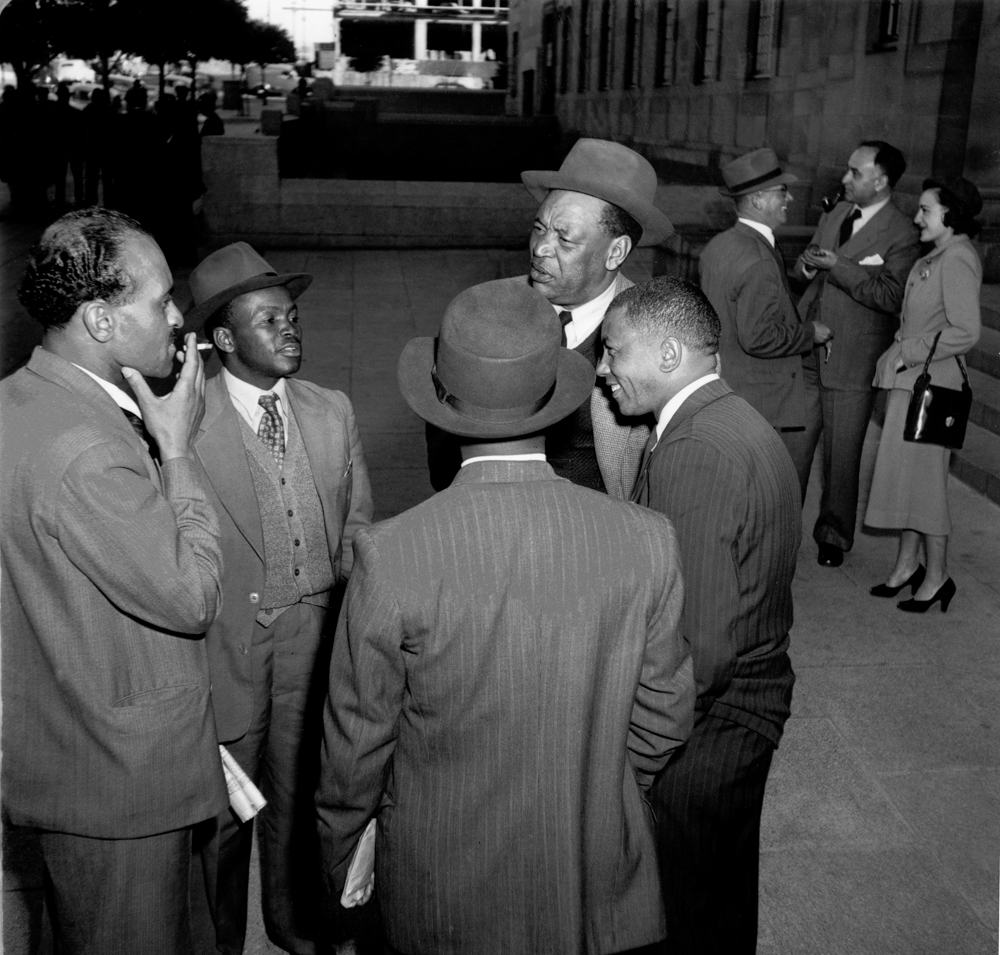
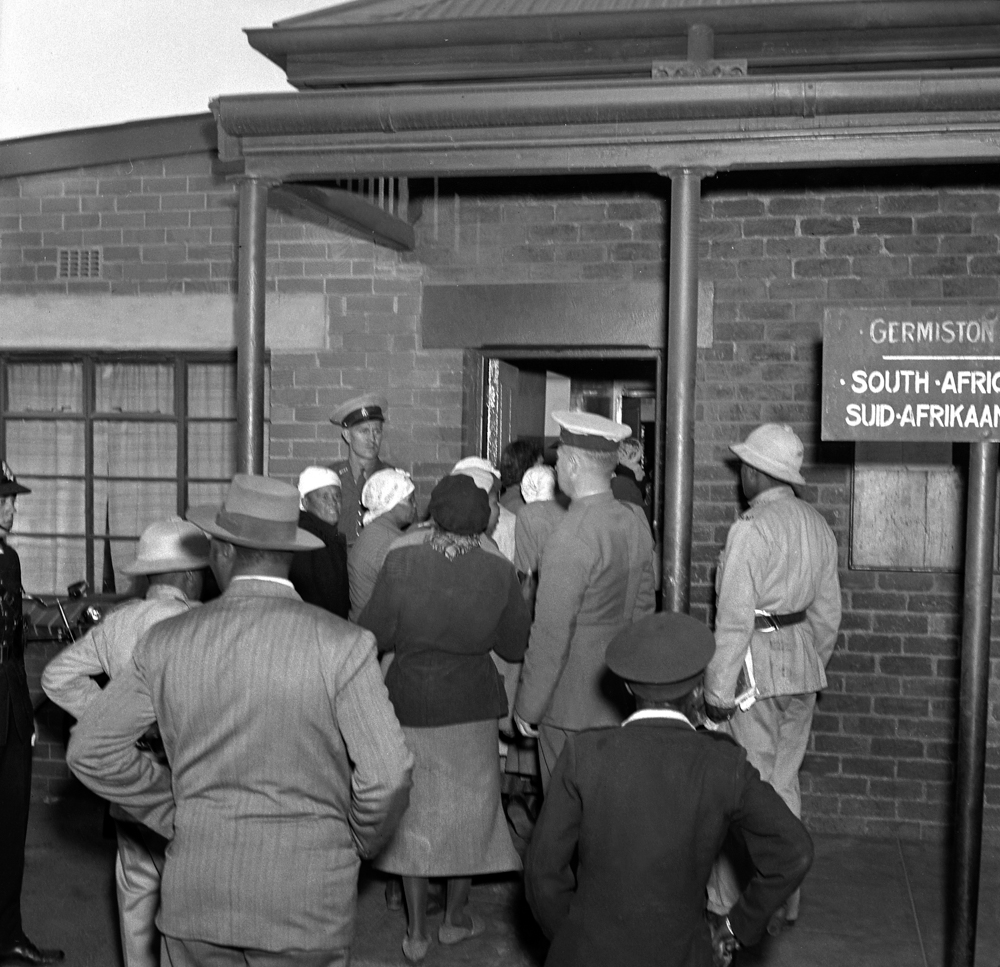
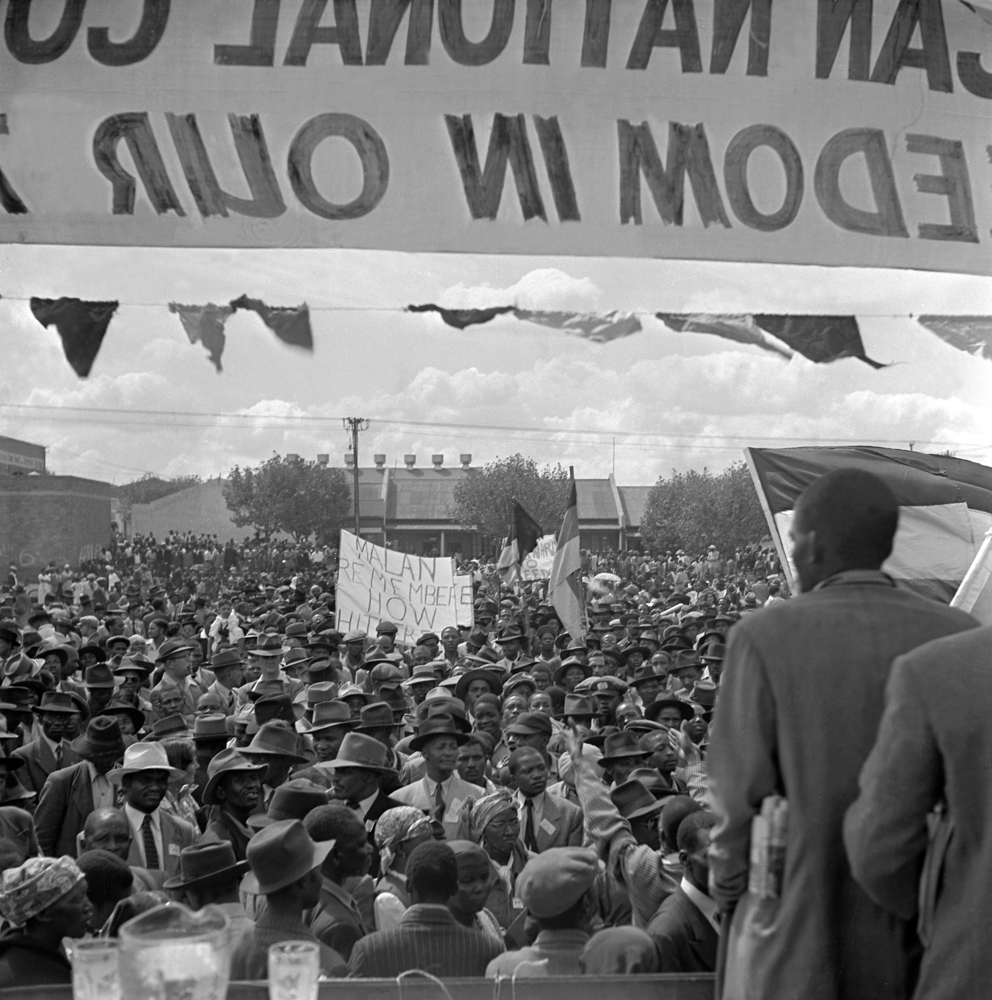
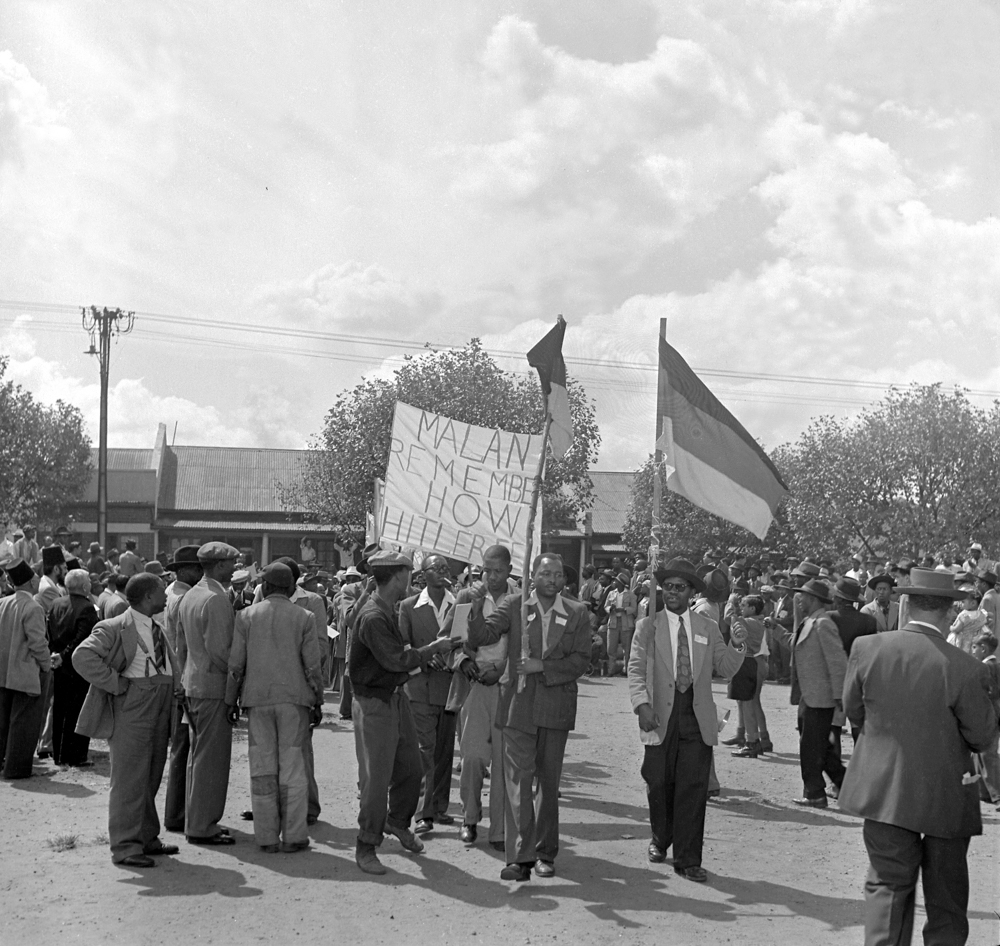
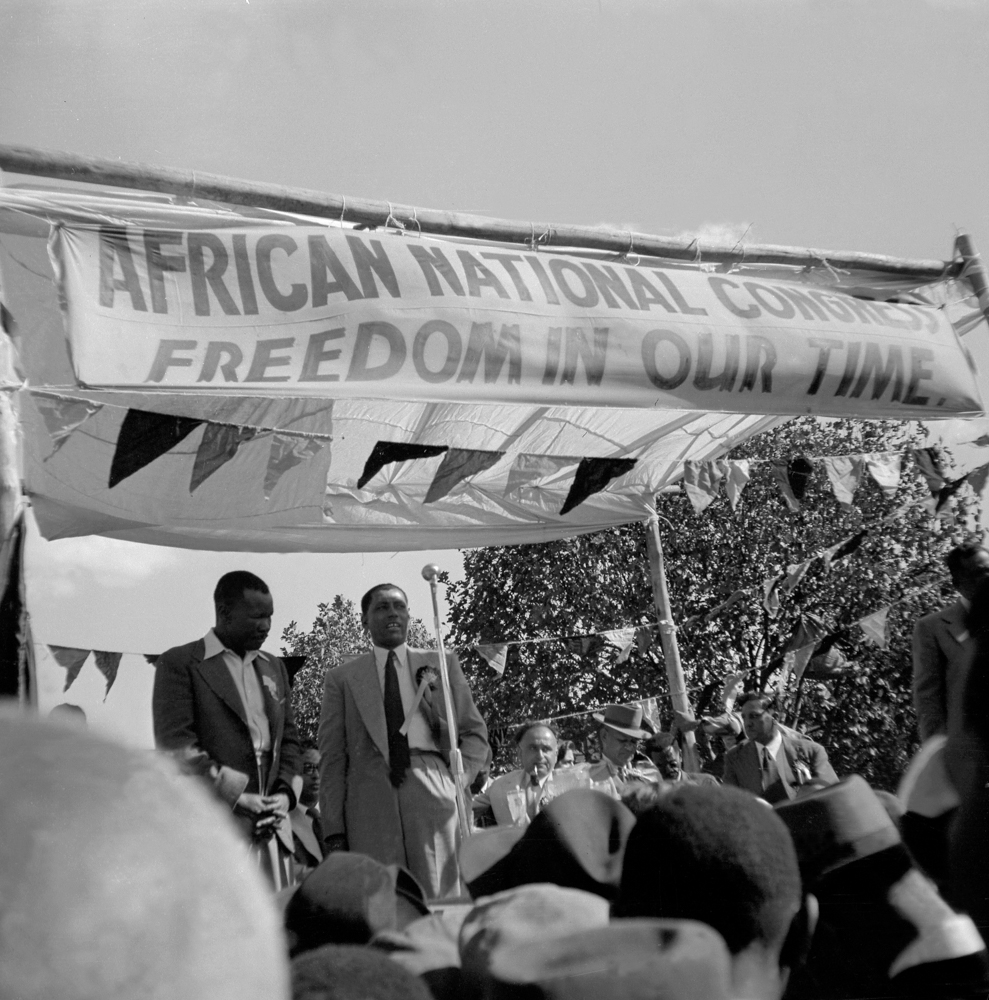
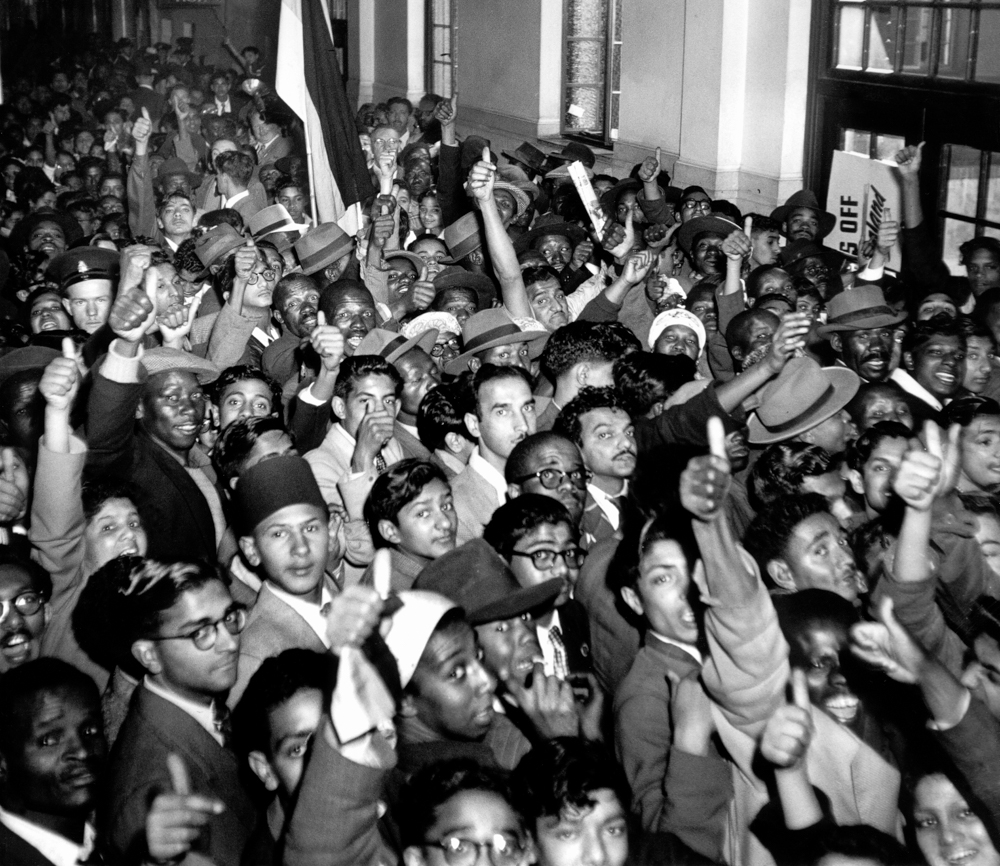
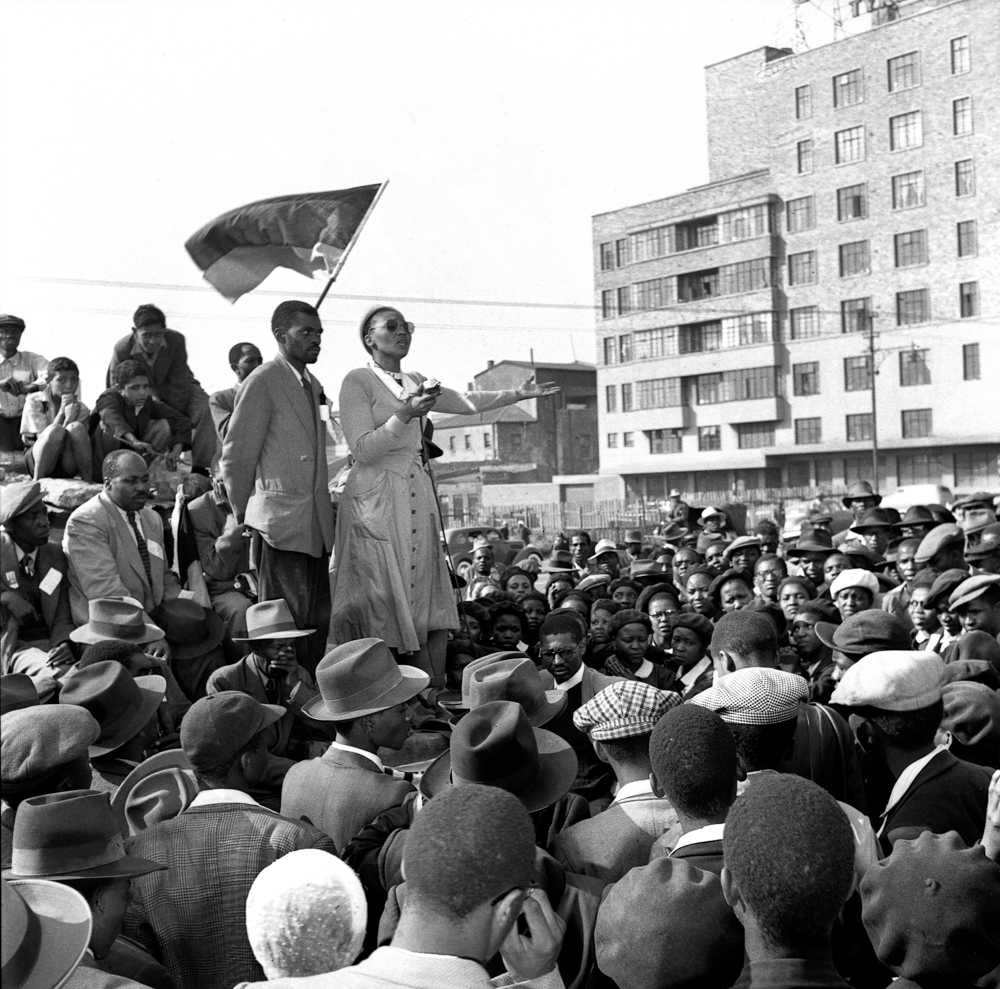
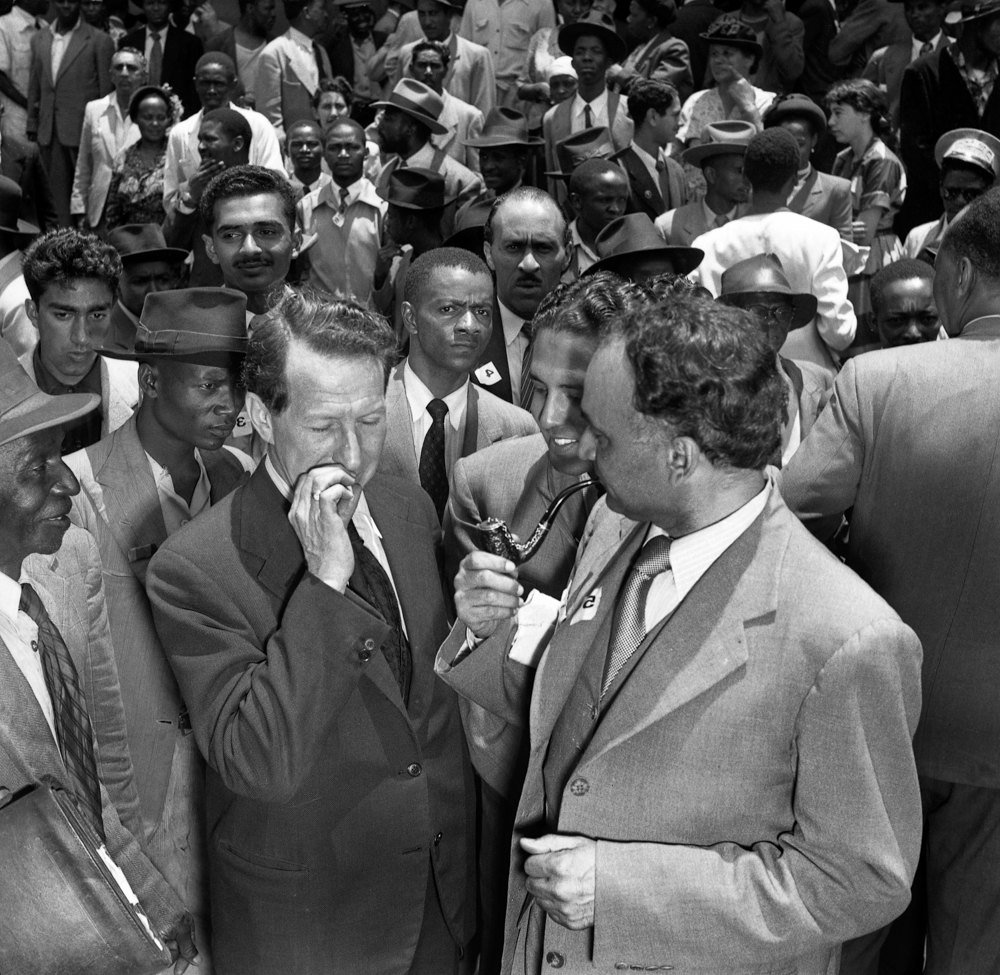
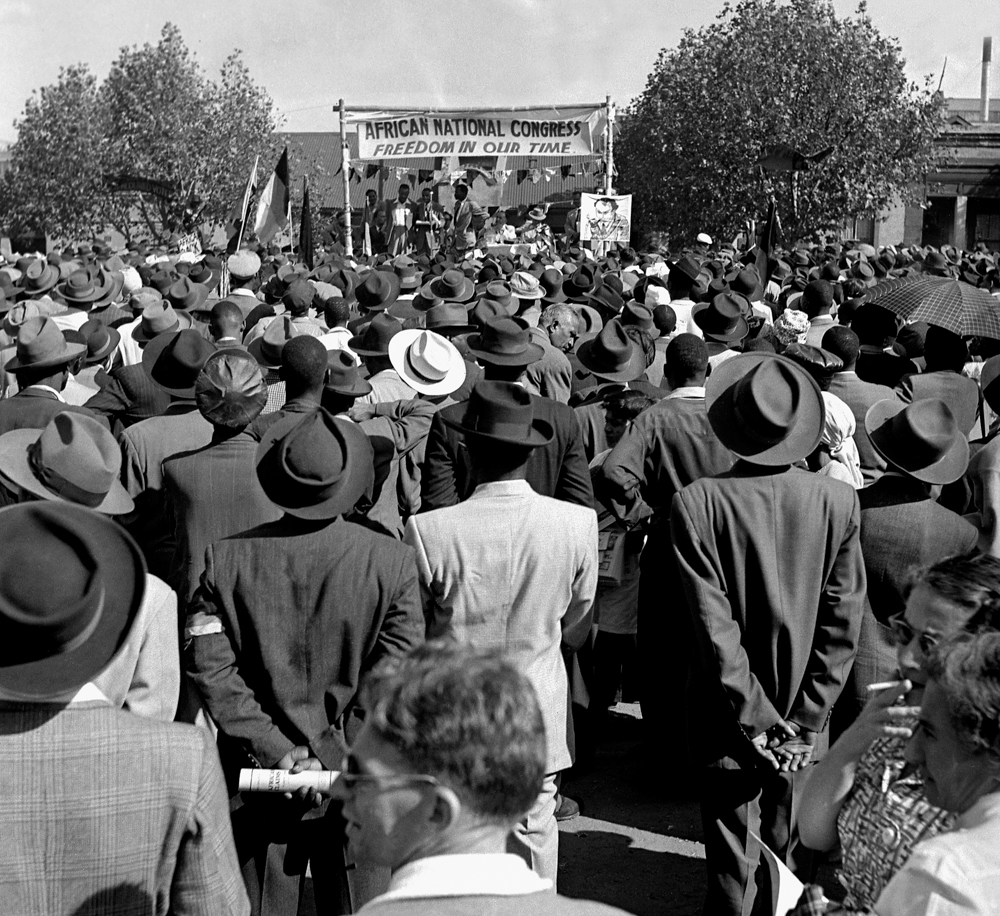
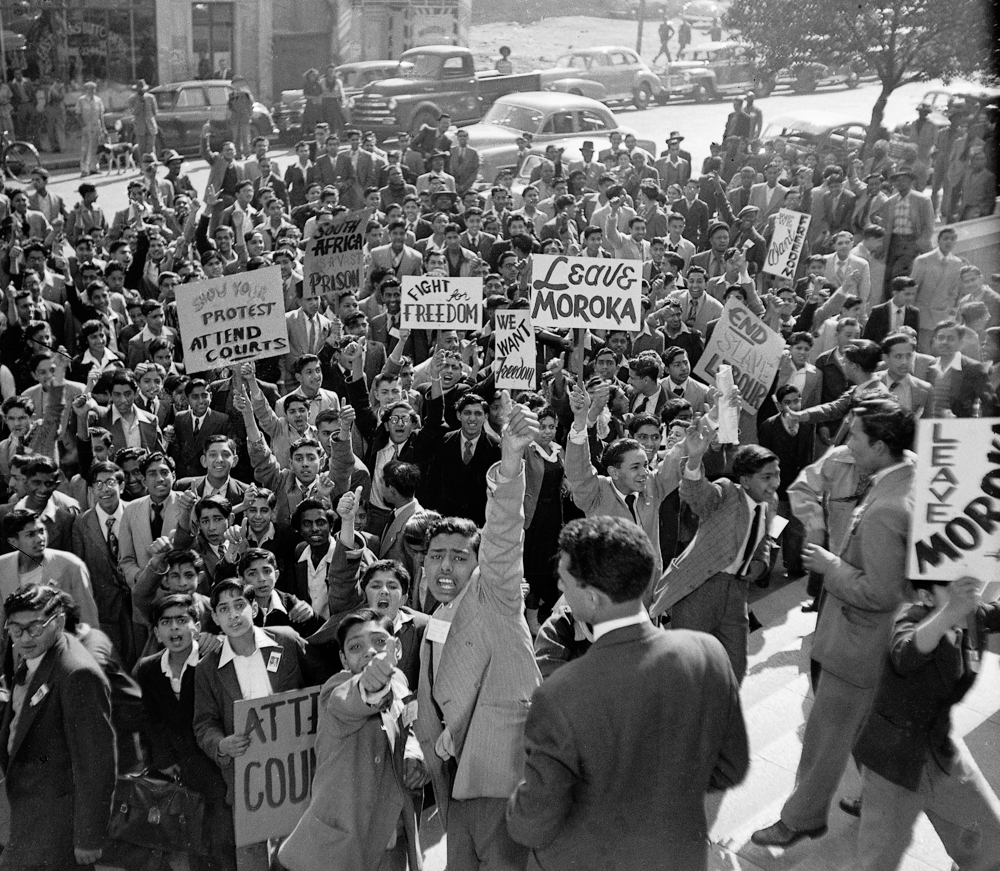
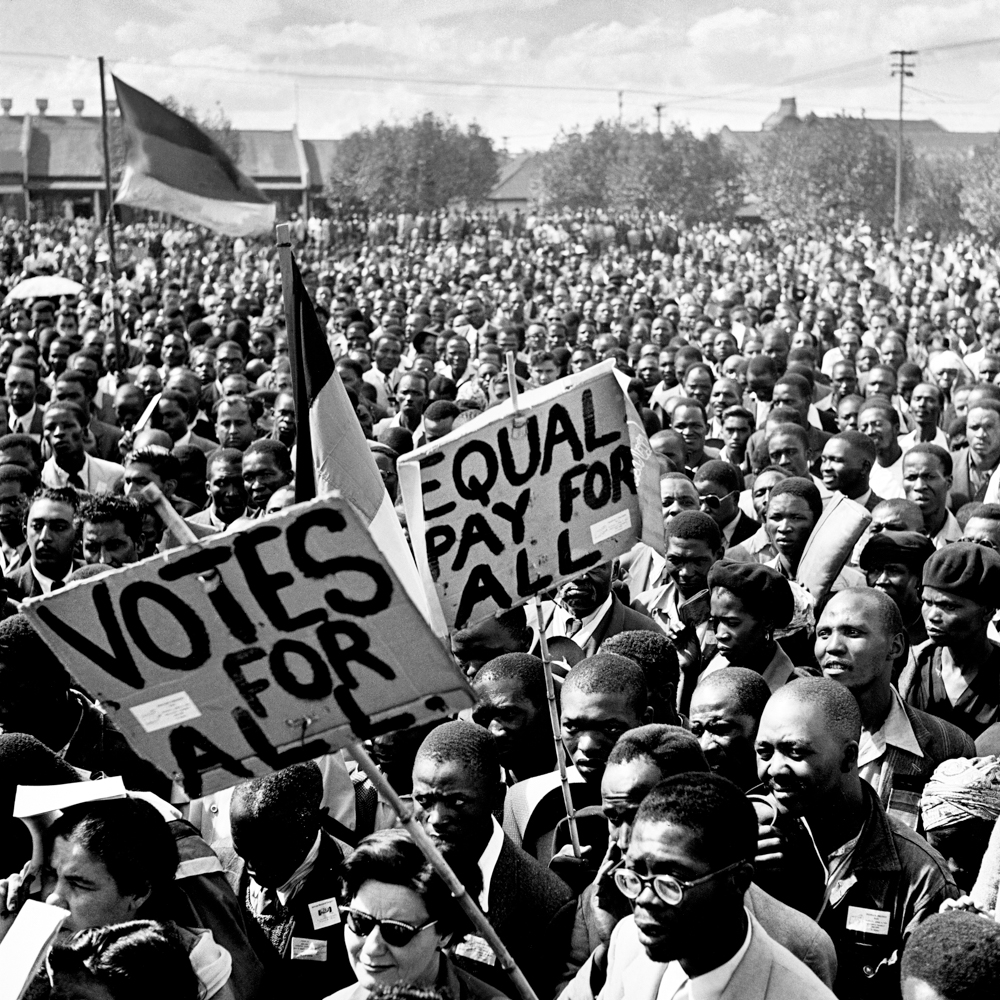
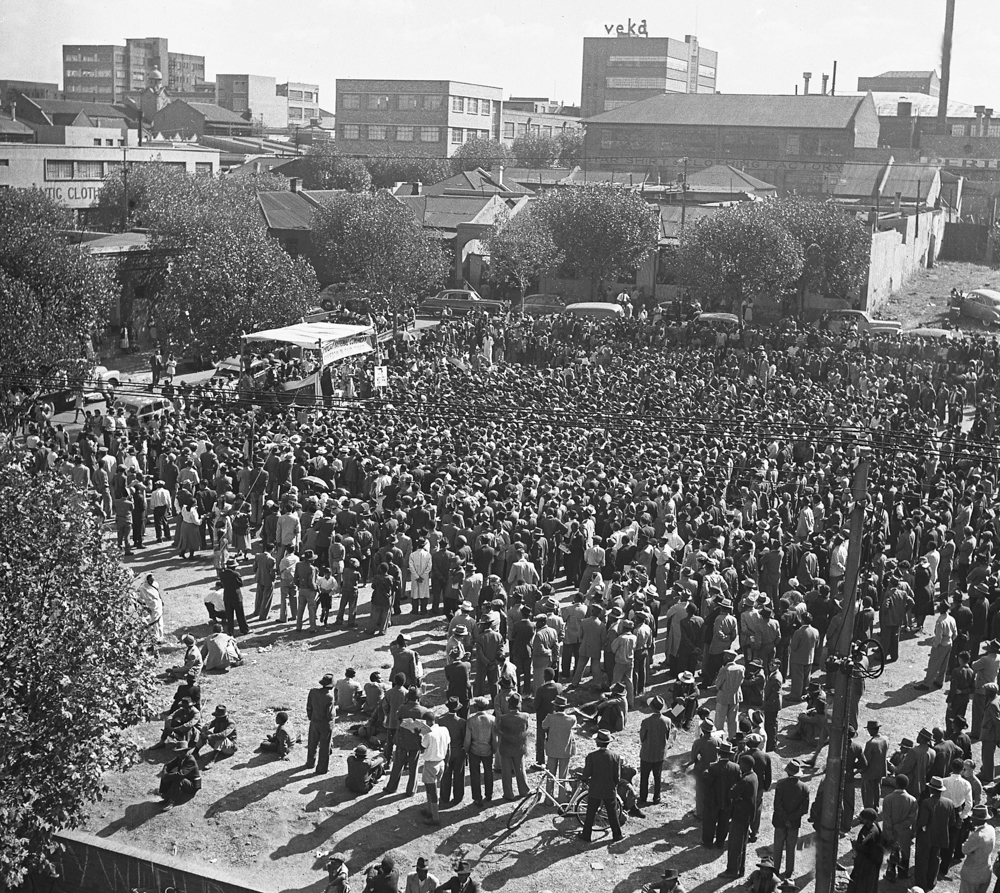
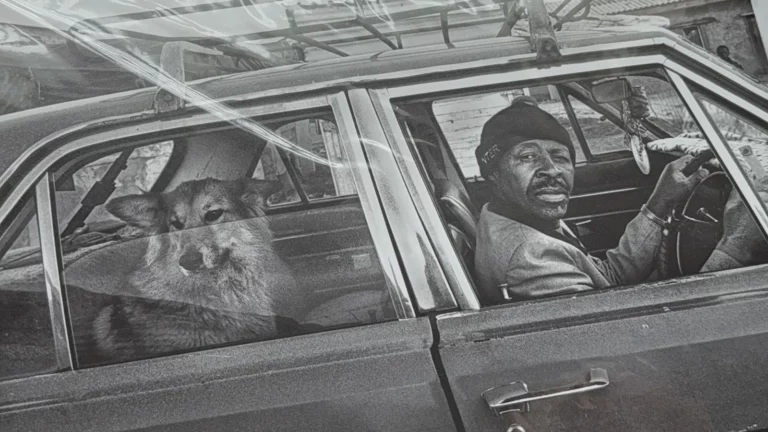
In 1952, the Defiance Campaign marked one of the first large-scale, coordinated acts of resistance against apartheid in South Africa. Jürgen Schadeberg’s photographs from this period record moments of protest, organisation and public presence, offering a visual account of a movement that sought to challenge unjust laws through collective action and civil disobedience.
Working at a time when political activity was closely monitored, Schadeberg documented gatherings, marches and quieter moments of preparation. His images describe not only visible acts of protest, but the broader atmosphere of mobilisation that made such action possible.
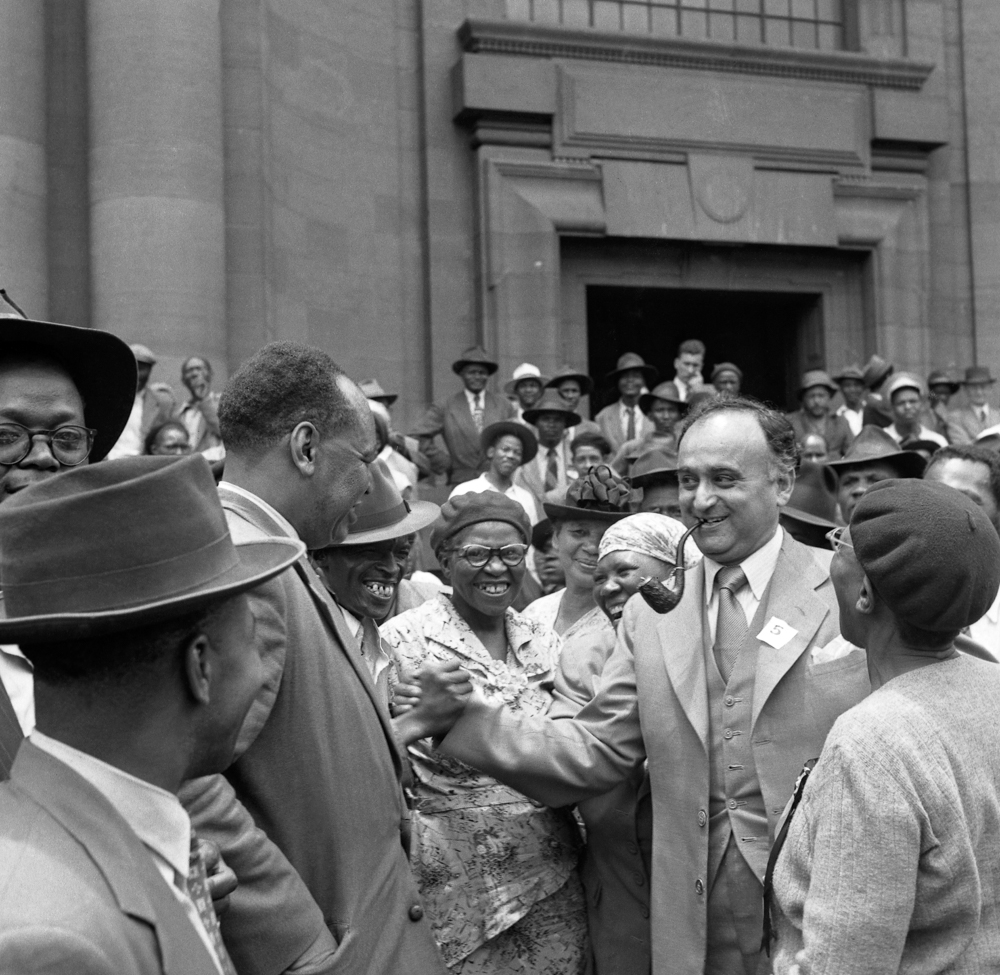
Individuals appear as participants within a movement that was still defining its language and structure. The photographs remain grounded in observation, allowing gesture, expression and context to carry meaning.
The Defiance Campaign and Collective Action
The campaign was organised around the deliberate breaking of apartheid laws. Participants entered restricted spaces and refused compliance, accepting arrest as part of a wider strategy of resistance.
Schadeberg’s images show how these acts were sustained through organisation, discussion and shared commitment. Protest appears not as a single moment, but as a process.
Presence and Risk
Visibility carried risk. Participants were aware of surveillance and consequence. The photographs convey this through restraint rather than dramatics.
Expressions remain composed, gestures deliberate and movements purposeful, reflecting a quiet determination.
“These photographs record the act of making resistance visible in public space.”
Photography as Record
These works function as both documentation and evidence. They preserve a moment where collective action began to take form within the public sphere.
Schadeberg’s approach avoids spectacle, allowing the structure of the photograph to carry historical weight.
Historical Context
The Defiance Campaign represents a formative moment in South Africa’s political history. These photographs contribute to understanding how resistance emerged through coordinated action and shared visibility.
For collectors, the work holds significance as both image and document, linking photographic practice with historical record.