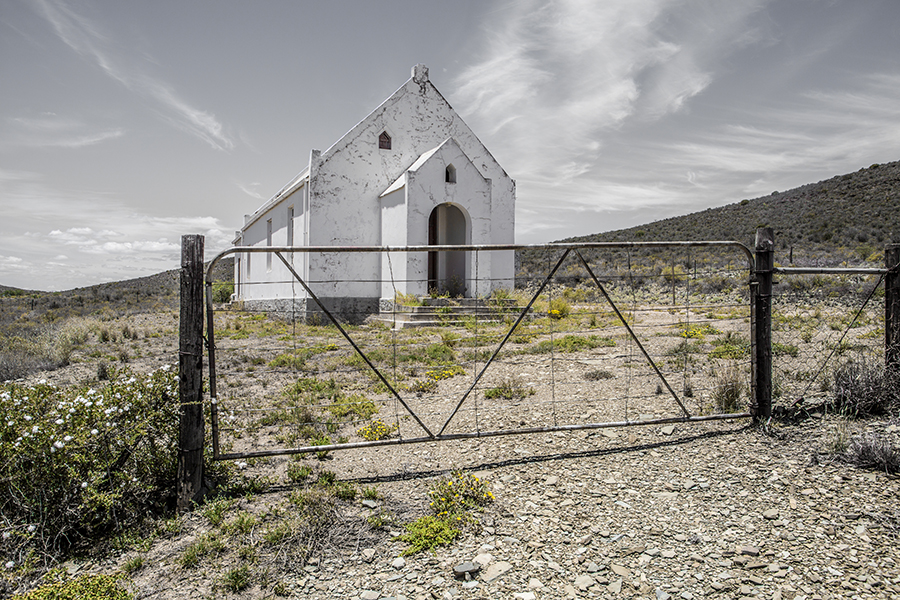
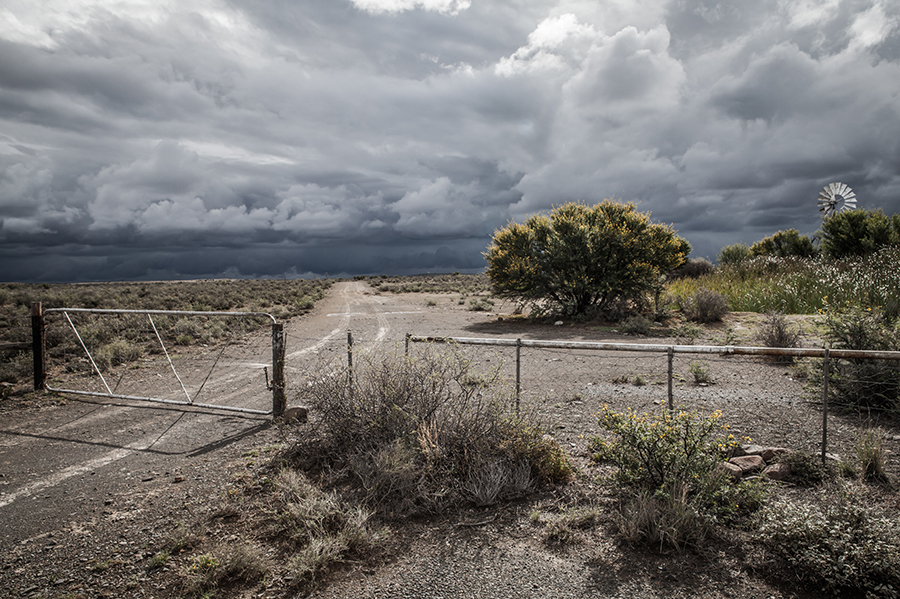
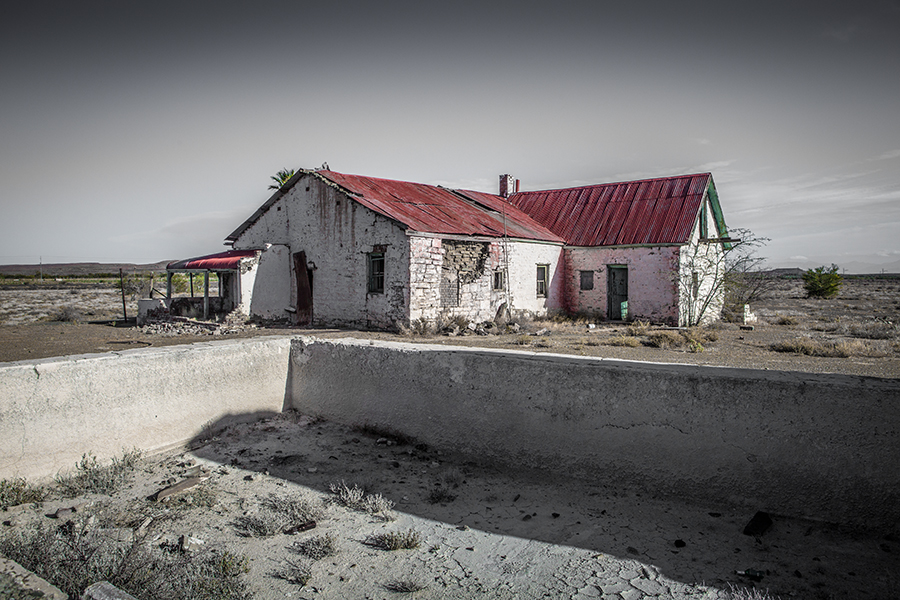
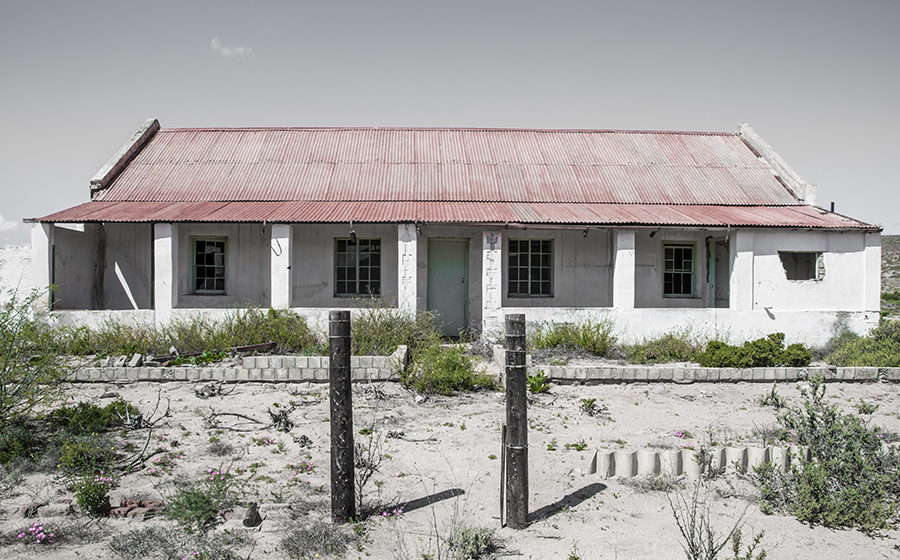
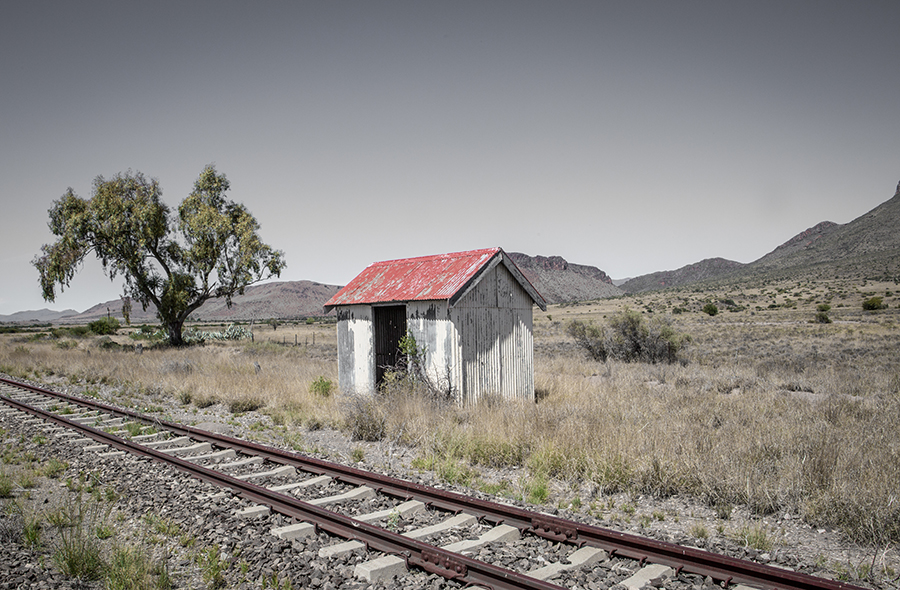
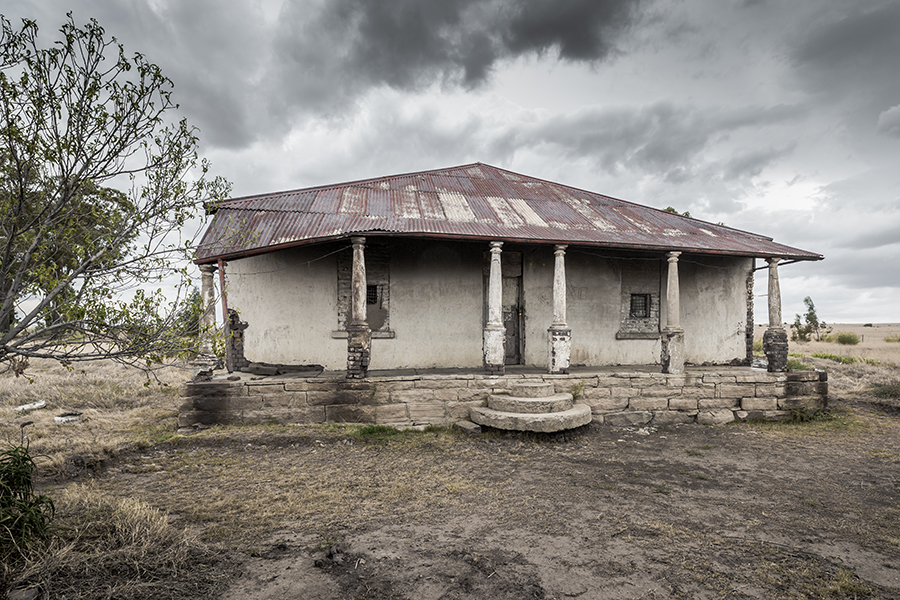
Over several years of travelling through the South African heartland, Johnstone began to notice recurring structures. Abandoned homesteads, often isolated and partially reclaimed by their surroundings, appeared across the landscape. Their presence is quiet but persistent, suggesting lives and histories that are no longer immediately visible.
These buildings exist in a state between permanence and disappearance. While physically present, their original function has faded, leaving behind fragments of narrative that cannot be fully reconstructed. The photographs do not attempt to resolve these histories, but instead hold them in suspension.
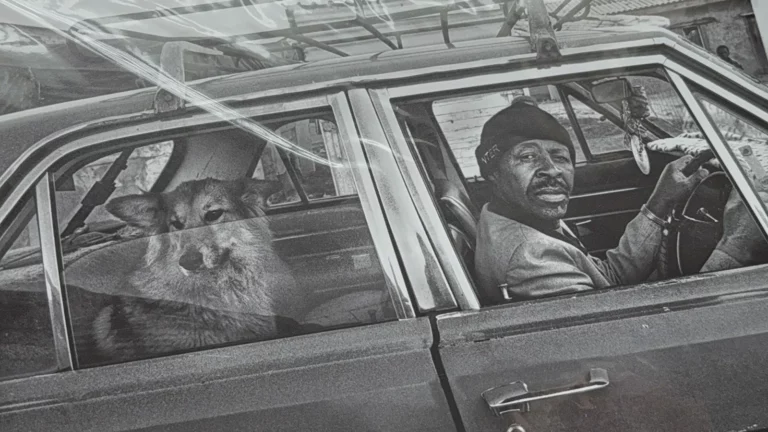
Johnstone’s approach is shaped by both landscape and interaction. Alongside photographing the environment, he engages with people encountered during his travels. These exchanges inform the work in subtle ways, grounding the images within a lived and social context rather than presenting them as isolated scenes.
“I love to engage with the people as well as the landscapes. I find it good for the soul.”
The resulting body of work is not defined by a single narrative. Instead, it offers a sequence of moments that suggest continuity across distance. The repetition of form, space and atmosphere builds a quiet rhythm, allowing viewers to move through the series at their own pace.
These images ask for a slower form of attention. Their impact is not immediate, but accumulative. If they hold the viewer for a moment longer, it suggests a shared recognition of something that remains present, even as it disappears.