In Conversation with Ruvan Boshoff
Photographer Ruvan Boshoff reflects on visual storytelling, newspaper photography and the signed James Soullier print he chose to collect.
When Ruvan Boshoff visited Gallery F, the conversation began with a signed James Soullier print. It soon opened into something broader: how photographers learn from one another, how newspaper work shapes visual instinct and why a single print can carry both personal and photographic history.
Boshoff began his photographic journey in the early 1980s while completing compulsory military operational service. Photography became a way to respond to events and understand how individual moments could be shaped into visual stories.
He later moved into professional newspaper photography, working at The Star and then the Sunday Times in Johannesburg. These newsrooms placed him among photographers including Juhan Kuus, Ken Oosterbroek and Dale Yudelman, each working within a demanding period of South African photojournalism.
A Print That Holds a Story
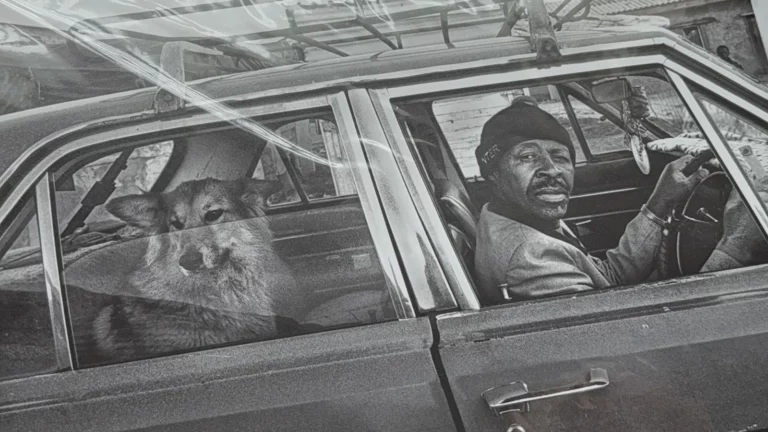
The signed James Soullier print at the centre of the conversation was not simply an image Boshoff admired. It connected him to a photographer whose approach to storytelling had influenced the way Boshoff and his colleagues thought about pictures.
A print can hold several histories at once. There is the moment represented in the image, the process through which the photograph was made and the later path that brought the physical object into a collection. Boshoff’s recollection gives the print a personal provenance that extends beyond its subject.
Beginning with a Camera in the Military
Boshoff’s early experience with photography developed during military service. The environment required alertness and an ability to recognise significant moments as they unfolded.
This way of looking became part of his later professional practice. Rather than treating a photograph as an isolated composition, he learned to consider what it revealed about an event, a place or the people within it.
Learning Through Newspaper Photography
Working for The Star and the Sunday Times placed Boshoff inside a fast-moving newspaper culture. Assignments demanded technical confidence, careful observation and an ability to communicate a story without unnecessary explanation.
The work also created an informal education between photographers. Pictures were discussed, compared and edited within a shared professional environment.
Boshoff worked alongside photographers such as Juhan Kuus, Ken Oosterbroek and Dale Yudelman. Their approaches differed, but each understood photography as a means of recording the social and political realities around them.
The Influence of James Soullier
James Soullier worked as chief photographer for the Sunday Express before becoming a chief photographer at the Sunday Times, where he worked from 1965 until 1991. His career helped establish him as an important figure within South African newspaper photography.
Soullier was closely associated with his Leica camera and preferred natural, ambient light. He chose to work with the conditions already present in a scene rather than relying on flash.
Boshoff remembers this influence in direct terms. Soullier’s importance was not based only on technical ability. It came from his understanding that a photograph needed to tell a story.
From Photograph to Physical Print
A photograph encountered in a newspaper is immediate and widely circulated. A physical print creates a different experience. It allows the image to be considered slowly and understood as an object with its own process, paper, condition and history.
The distinction becomes especially important when comparing vintage, signed and later archival prints. Gallery F’s guide to signed vs unsigned prints provides useful context for understanding how these details affect the character and collectability of a work.
Why the Signature Matters
A photographer’s signature can add evidence of a direct relationship between the maker and the print, but it should never be considered in isolation. Provenance, print date, process, condition and supporting documentation remain equally important.
Boshoff’s signed Soullier print illustrates why collectors often ask how a work entered a collection and what was known about it before acquisition. The story surrounding the object can become an important part of its continuing history.
Preserving Newspaper Photography
Newspaper photographs are often created under immediate pressure, but their importance can extend far beyond the day of publication. Over time, they become records of people, places and events that may no longer exist in the same form.
Preserving negatives, contact sheets, prints and contextual information allows these images to remain understandable. This principle also guides the work of the Photographic Archival and Preservation Association of South Africa, which helps protect historically significant photographic collections.
Viewing James Soullier’s Work
Gallery F’s James Soullier collection includes photographic works connected to his long career in South African photojournalism. Available listings provide information about medium, printing process, edition status and provenance where relevant.
Collectors can browse available photographic prints through the Gallery F store or contact the gallery for information about individual works, signatures, print histories and availability.
“Jimi influenced us, because he had a nice way of telling stories…It was all about telling stories.”
Collecting James Soullier
Interested in a work by James Soullier?
Contact Gallery F for information about available works, editions, print sizes, provenance and pricing.
More Stories